October 12, 2026
Mizzou Quantum Day 2026 explored the evolving quantum technology landscape, emerging opportunities and challenges, and workforce development.
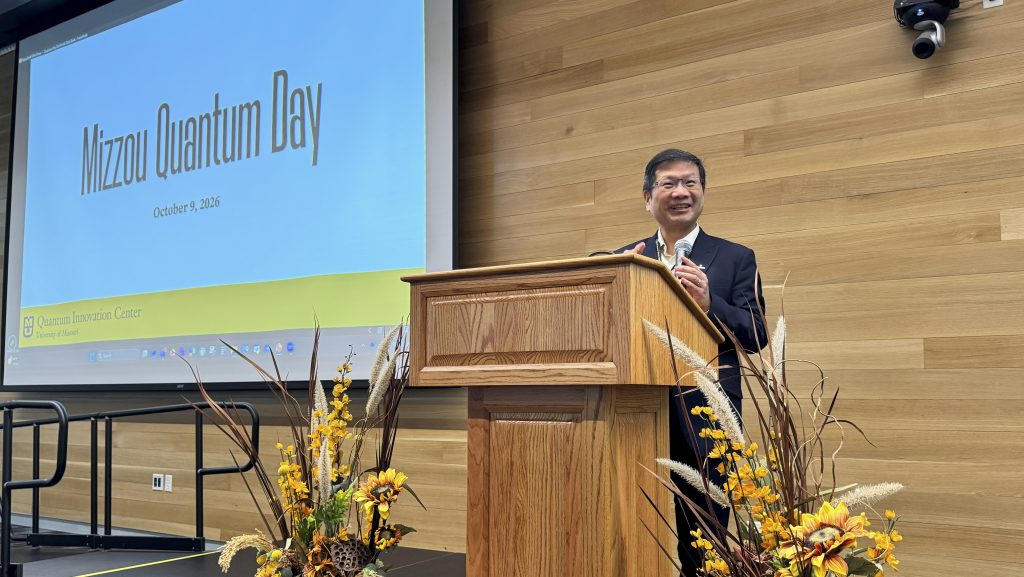
Researchers, industry leaders, students and policy makers gathered Oct. 9 at the State Historical Society of Missouri to discuss the rapidly evolving quantum technology landscape at Mizzou Quantum Day 2026.
Professor Chi-Ren Shyu, director of the Quantum Innovation Center, welcomed guests and emphasized the importance of working together at the intersection of education, government and industry.
“The question is no longer just when large-scale, fault-tolerant quantum computers will arrive, but whether we will be ready when they do,” he said. “No single institution can prepare for this future alone.”
Mizzou Quantum Day was part of ongoing efforts to build the partnerships among academia, industry and government needed to advance quantum research, develop a quantum-ready workforce and prepare Missouri for the opportunities ahead, Shyu said.
“You cannot build quantum programs without this partnership,” Shyu said in his welcoming remarks. “I’m confident that today’s conversations will lead to many new collaborations.”
Mizzou Engineering Dean Marisa Chrysochoou emphasized that Mizzou was prepared to lead technological advances.
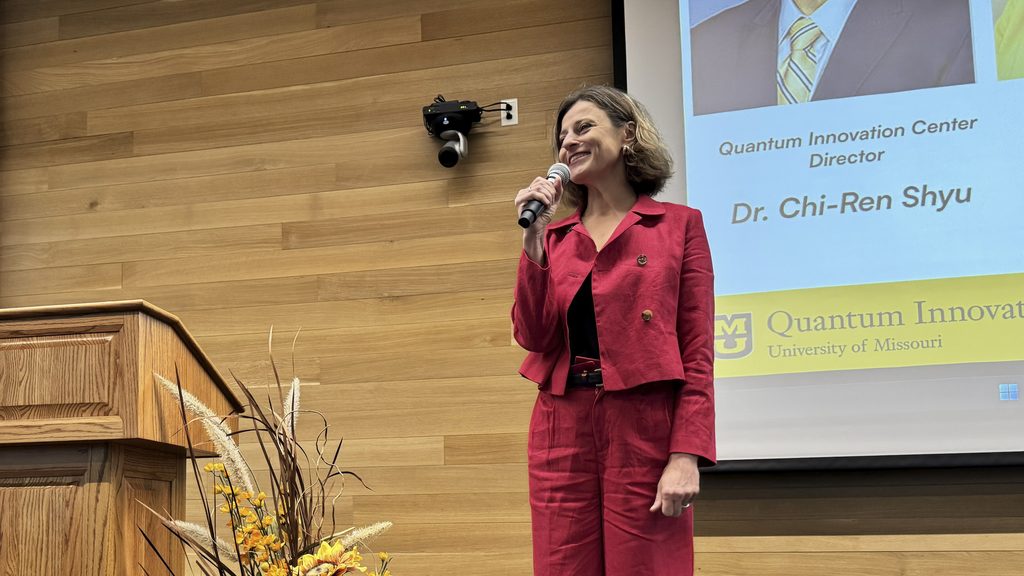
“Our ability as a nation to remain at the forefront of scientific innovation will depend on our ability to understand and harness quantum technologies,” she said. “As Missouri’s flagship university, we will continue to invest in research and education and be at the center of advances in this field.”
Oliver Dial, fellow and vice president of quantum systems at IBM, delivered a keynote address to more than 100 attendees.
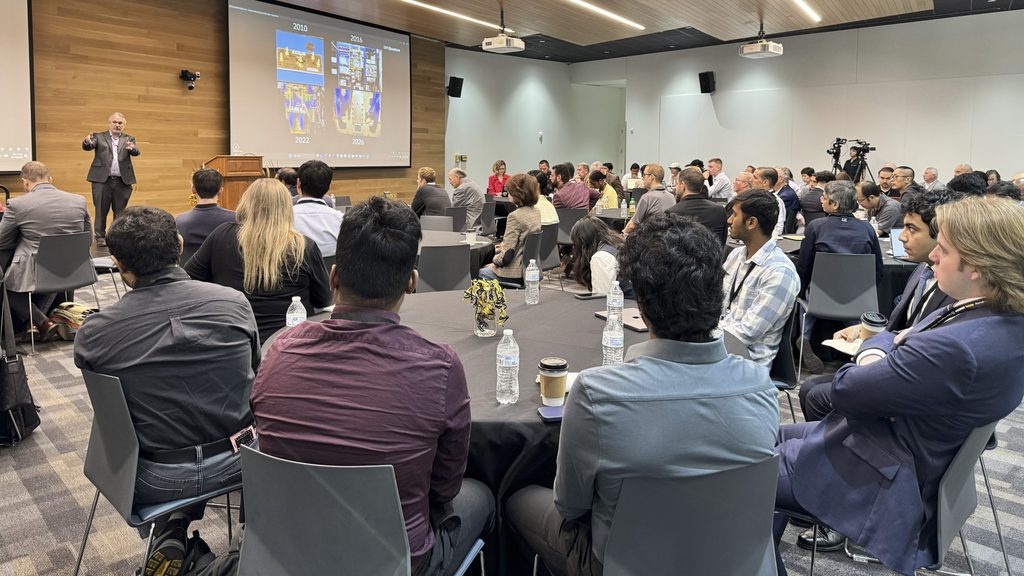
“If we want to bring this to the world, we need two things: really good hardware and a network of researchers learning how to apply it to specialized domains,” Dial said. “Without these two things working together, we’re not going to do it.”
Shyu moderated a panel of industry leaders in a discussion on advances across quantum hardware and software, technology roadmaps, scaling challenges, and what will be required to build the emerging fault-tolerant quantum ecosystem.
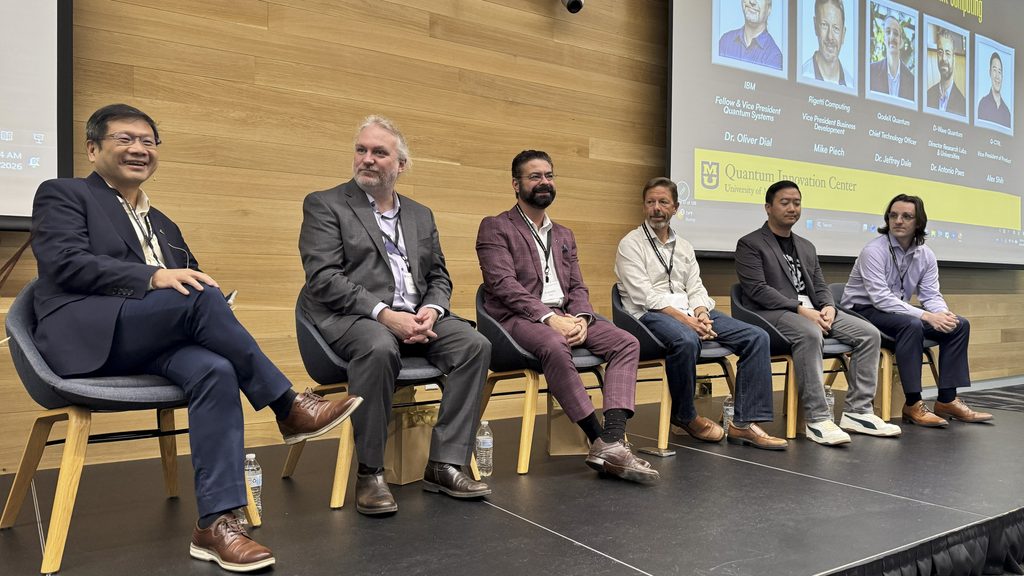
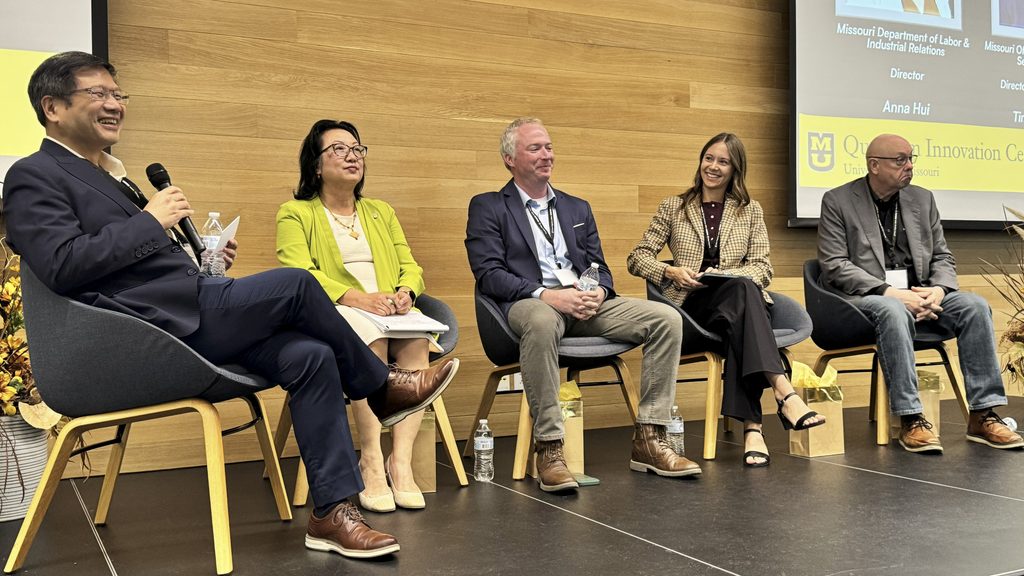
A panel of state leaders discussed how government, industry and higher education can prepare for the quantum era and reinforce Missouri’s long-term competitiveness in the area.
The winners of the Quantum Technology Information and Computing Club hackathon were also announced at the event:
- 1st place ($500): Arpita Howlader and Sameep Dhakal,
- 2nd place ($300): Sara Shojaei and Emma Bennett
- 3rd place ($200): Muhammad Mahad Khaliq, Owen Friedewald, Srikar Alla and Varshith Pulluri
Attendees also had the opportunity to review research posters by Quantum Information Center summer interns. Matthew Bruenning received the award for Outstanding Poster.