Engineering Innovation
Research
Engineering Research at Mizzou
Mizzou Engineering conducts research that addresses real-world challenges in areas such as artificial intelligence, infrastructure, energy and advanced manufacturing. Faculty and students collaborate across disciplines and with industry partners to develop solutions that impact Missouri and communities around the world.
Research opportunities are available to undergraduate and graduate students through labs, research centers and interdisciplinary initiatives.

$35M
Research expenditures in FY26
13
Research centers and institutes
500
Graduate students
Research Areas
Mizzou Engineering research spans a range of disciplines and interdisciplinary areas,. These focus areas bring together faculty expertise and support collaboration across departments and research centers.
Computing, AI and Intelligent Systems
Machine learning, data science and operations research, cybersecurity, quantum information and robotics.
Anchoring Centers
AERI
Center for Geospatial Intelligence
Quantum Innovation Center
Biomedical and Health Engineering
Devices and biosensors, biomaterials and regenerative medicine, neuroengineering, bioprocessing and health informatics.
Anchoring Centers
NextGen Precision Healthr
Advanced Materials, Manufacturing and Mechanical Systems
New materials and the processes that make them, plus aerospace, controls and automation.
Anchoring Centers
MU Materials Science and Engineering Institute
Energy and Nuclear
Power systems, thermal sciences and nuclear science and engineering.
Anchoring Centers
Payne Energy Innovation Center, opening 2028
MURR partnership
Water and Environmental Engineering
Water resources and hydrology, environmental engineering and remediation.
Anchoring Centers
Missouri Water Center
Infrastructure and Transportation
Structural and geotechnical engineering, transportation systems and safety and construction and smart infrastructure.
Anchoring Centers
MCTI
MOWZES
Get Involved
Student Research
Students at Mizzou Engineering can participate in research throughout their academic careers. These experiences allow students to apply engineering concepts, build technical skills and contribute to new discoveries.
- Working with faculty on funded research projects
- Participating in engineering labs and research groups
- Engaging in undergraduate research programs
- Completing graduate-level research and theses
Education and Workforce
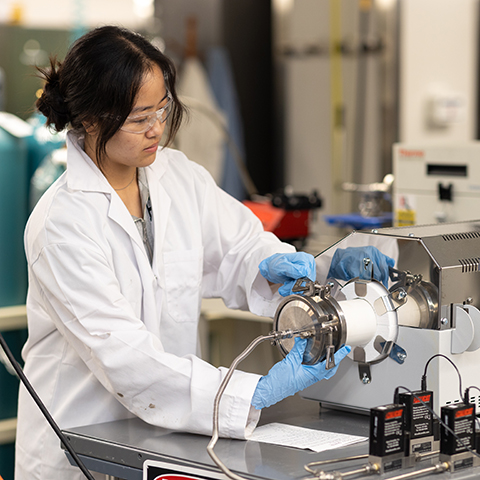
Engineering education is itself a research problem here. We study how students learn in the foundational courses where they most often stall, train graduate researchers across disciplines, and build pathways into engineering and construction careers.
The work includes a five-year NSF project with the University of Connecticut on neuroadaptive teaching and AI-powered personalized learning.
Research News Feed
Sep. 23, 2026
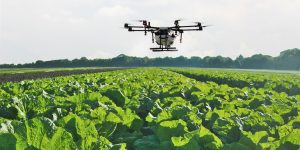
Helping ag drones make better decisions faster
FieldVision allows drone swarms to adapt to changing network and computing conditions to analyze images more reliably and efficiently, enabling precision agriculture.

Sep. 21, 2026
Mizzou study featured in Advanced Materials
The interdisciplinary study focuses on patterns of molecular building blocks used to create conductive polymers and provides a new design rule for materials engineers.

Sep. 8, 2026
Researchers chart new course for AI-powered discoveries
An emerging form of artificial intelligence could give scientists a clearer view of how living systems change over time and accelerate the pace of medical discoveries.
Aug. 20, 2026
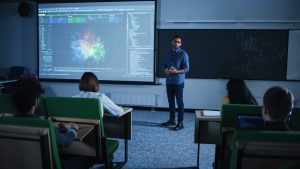
Advancing AI literacy among high school students
Mizzou Engineering researchers are leading a project to promote AI-literacy with cybersecurity concepts among the next generation of scholars and professionals.