June 08, 2026
Mechanical engineering undergrads Diego Ochoa and Ashlyn Ohlms won the Entrepreneurship Alliance competition with a medical device born of insight, ambition and collaboration.
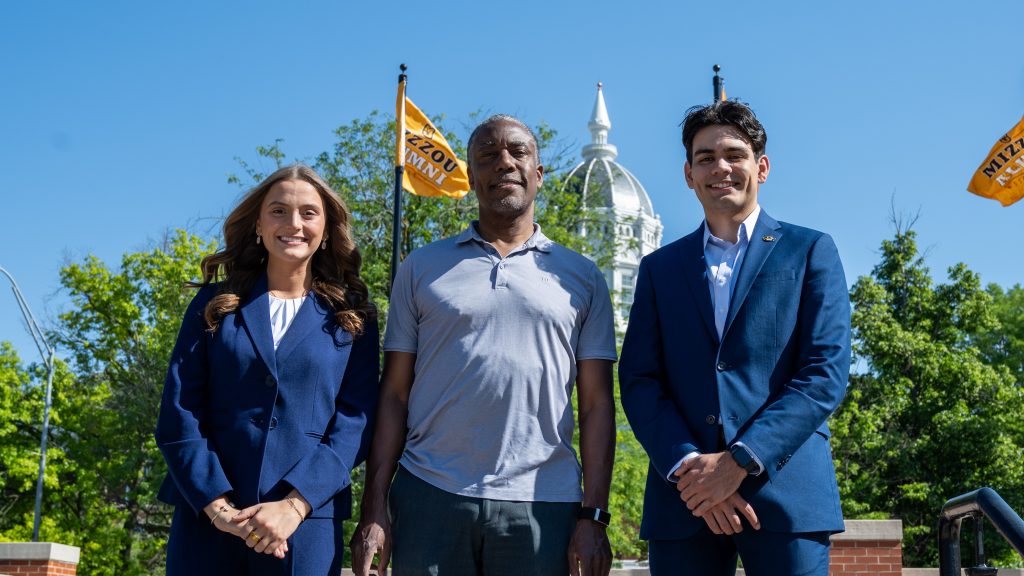
At Mizzou, collaboration helps us improve lives and strengthen communities everywhere. Recently a pair of mechanical engineering majors demonstrated how powerful an idea can be when reinforced with the insights from a range of disciplines.
Early in 2026, juniors Diego Ochoa and Ashlyn Ohlms were selected for the Entrepreneurship Alliance. An intensive eight-week program for students looking to turn business ideas into startups, the Entrepreneurship Alliance is an initiative of the Center for Entrepreneurship and Innovation in the Robert J. Trulaske, Sr. College of Business.
Ochoa and Ohlms ultimately won the competition with their idea for a device that quantifies hamstring injury and recovery. The program forced them to confront questions outside engineering. It was grueling, humbling and entirely worthwhile.
“Looking back, everything snowballed because we consistently pushed it,” Ochoa said.
The product
Ochoa and Ohlms’ idea was conceived at a make-a-thon competition they had attended in 2025 as part of the student organization IMPACT (Initiative for Medical Prototyping and Applied Concept Translation).
The make-a-thon challenged teams to create orthopedic devices, physical therapy tools or prosthetics. Because the IMPACT team members had all played sports in their high schools, hamstring injuries became an obvious focus.
“Hamstring injuries are very common and especially hard to manage and rehabilitate,” Ochoa said. “It’s difficult to know when an athlete is truly ready to return to play. I’ve had teammates who waited months, felt okay, came back too early, and then were re-injured.”
Ochoa and Ohlms’ idea was a sleeve with electromyography (EMG) sensors to detect electrical signals sent from the brain to activate the muscles in the hamstring and send that data to an app that translates the raw EMG data into information non-experts can understand.
“The goal was to create a clear, shared understanding between the athlete and the trainer and take the guesswork out ofreturn‑to‑play decisions,” Ochoa said.
The program
Back at Mizzou, Ochoa and Ohlms heard the Entrepreneurship Alliance was looking for engineering‑based teams, as many past projects tended to be apps or services rather than physical devices.
The experience pushed the pair outside their comfort zone.
“We had to think about who actually makes money, why they would pay for the device, and how the business would sustain itself,” Ohlms said. “Those aspects are critical for a successful product, but they aren’t always emphasized in engineering coursework.”
“Our mentors would sometimes tell us, ‘This idea probably won’t work,’ and then explain why,” Ochoa said.
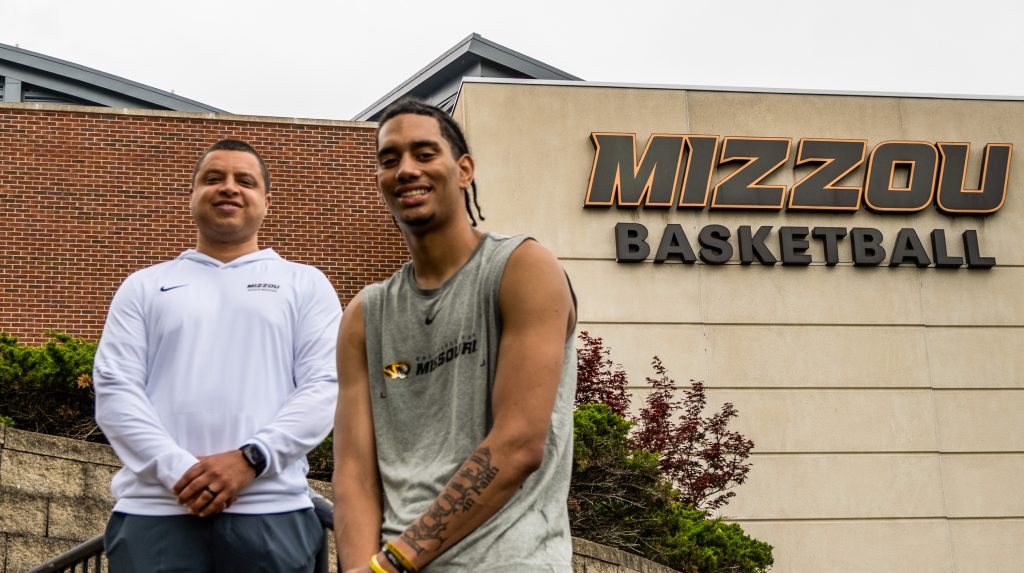
The engineers needed to validate their idea. They approached Mizzou Basketball guard/forward Trent Pierce, a business major, who Ochoa knew from high school.
“At the time, I was going through an injury,” Pierce said. “It was a lot of trial and error — trying to come back, seeing how I felt, not feeling good, and having to sit out again. It was frustrating.”
Pierce introduced Ochoa and Ohlms to Men’s Basketball senior athletic trainer Chris Perrin, who was interested in data‑driven decision‑making in sports medicine.
“Hamstring injuries act different based on the individual,” Perrin said. “What interested me was the possibility of getting athletes from ‘I think I’m good’ to a more confident, data‑based decision.”
The pitch
Pierce and Perrin’s insights helped Ochoa and Ohlms validate their idea, but as the culminating pitch competition approached, they were scrambling to build a working prototype.
“We ordered sensors and circuit boards, but they arrived too late for the competition itself,” Ohlms said. “We improvised by 3D‑printing sensor housings, sewing them into fabric, and using wiring to demonstrate feasibility on presentation day.”
When the day of the pitch session finally arrived, Ochoa and Ohlms had 10 minutes to present their purpose, problem, product, market fit, timelines and financials. Then they faced three minutes of question from judges.
One of those judges was Kelsey Meyer Raymond, executive director of Entrepreneurship Programs in the Division of Research, Innovation and Impact.
“It was clear that they were passionate about building and solving real problems in the world,” she said. “I was most impressed by their customer discovery work in having in-depth conversations with trainers and athletes to better understand the problem, and whether their solution would be better than alternatives.”
The prognosis
Those conversations paid off. Ochoa and Ohlms finished first in the competition and received $7,000 in funding. This summer, the pair are working on further prototyping and validation and beginning discussions for a clinical pilot study.
“If their device hits all the goals they’ve projected, I think it has the potential to truly help,” athletic trainer Perrin said.
Ochoa and Ohlms encouragedstudents curious about the Entrepreneurship Alliance to take initiative and build confidence in themselves and their ideas by getting involved on campus.
“You have to believe in your idea if you want others to believe in it,” Ochoa said. “Joining organizations like IMPACT or any project‑based engineering team is a great way to start, even if you don’t have an idea yet.”
“Things don’t just happen on their own,” Ohlms said. “Make connections, put yourself out there and be willing to pivot.”
Want to engineer a better future? Become a Mizzou Engineer!