April 21, 2026
The NextGen Center for Influenza and Emerging Infectious Diseases is expanding to advance studies on how the virus spreads — and how to stop it.
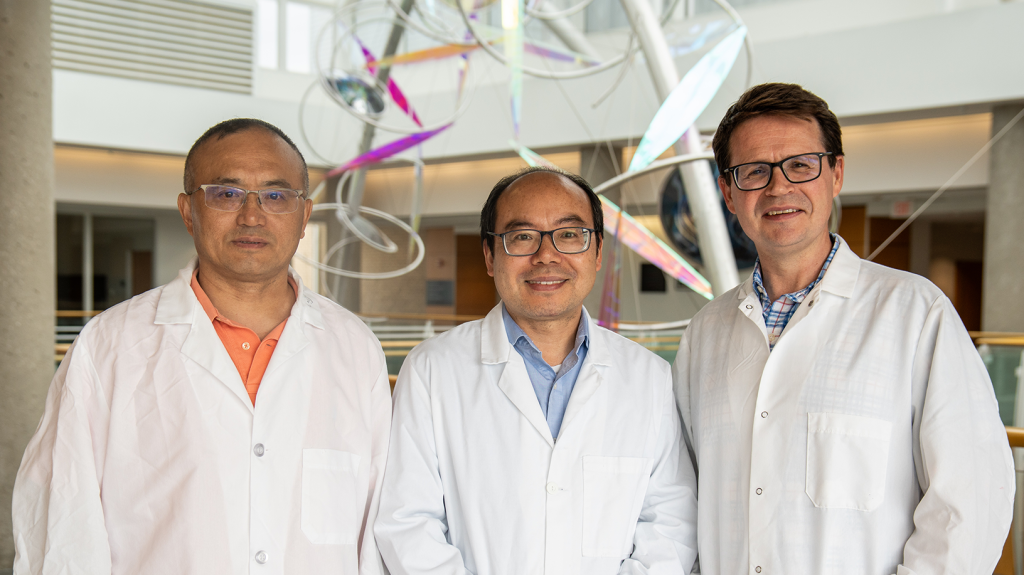
By Brian Consiglio | Show Me Mizzou
Photo by Reagan Manis
The University of Missouri is at the forefront of fighting the flu, one of the most common contagious respiratory illnesses that hits workplaces, schools and homes every winter.
Recently, Mizzou’s NextGen Center for Influenza and Emerging Infectious Diseases expanded to create more than 17,000 square feet of biocontainment space for investigators to safely study the influenza virus. When that Phase 2 project wraps up in May 2026, the center’s research capacity will double, positioning Mizzou as a national leader in the fight against influenza and future pathogens.
“Now that we have increased the center’s capacity, we hope to improve collaboration opportunities with industry partners moving forward,” Henry Wan, the center’s director and a Curators’ Distinguished Professor, said. “By working with pharmaceutical and technology companies that can potentially benefit from our foundational research and preclinical models, our discoveries at this center may lead to developing products that ultimately improve human and animal health.”
The center’s upgrades will also allow researchers to more accurately mimic real-world conditions that affect how flu spreads. This advancement will accelerate discoveries into how the virus travels in different temperatures and humidity levels, and it will pave the way for developing new treatments and vaccines designed to block transmission more effectively.
“By being able to change the temperature and humidity levels in this center, we can better understand the factors that impact virus transmission,” Wan said. “Perhaps that new knowledge can help us mitigate the spread of the virus by adjusting ventilation systems during certain times of the year in homes, hospitals and classrooms.”
An epicenter of next-generation flu research
Wan came to Mizzou in 2019 to lead the center and to grow Mizzou’s reputation as a national leader in infectious disease research. He has appointments in the School of Medicine, the College of Veterinary Medicine, the College of Engineering and Bond Life Sciences Center.
“What brought me to Mizzou was the interdisciplinary collaboration on campus, with researchers in medicine, veterinary medicine, engineering and agriculture working together to solve public health challenges facing society,” Wan said. “With the infrastructure investments Mizzou has made in the Genomics Technology Core, the Laboratory for Infectious Disease Research and especially the NextGen Center for Influenza and Emerging Infectious Diseases, we are learning more about influenza transmission, paving the way for more effective treatments and vaccines.”
That includes adjacent research projects. For example, John Driver, an associate professor in the College of Agriculture, Food and Natural Resources and Bond LSC principal investigator, is working to better understand which immune cells are most responsive to an influenza infection using a powerful tool called single-cell RNA sequencing. Wenjun Ma, a researcher in the College of Veterinary Medicine and School of Medicine, is developing novel vaccines and strategies to protect animals and humans from highly pathogenic avian influenza (bird flu), swine flu and other important zoonotic infectious diseases such as Rift Valley fever. And Wan is studying how the body’s immune system “remembers” the flu and how various factors, including previous infections or pre-existing health conditions, affect that immunological memory.
“Whether it’s developing a universal vaccine that better accounts for all of these factors or developing different vaccines that are customized and tailored for specific individuals, the work we do in this expanded facility will ultimately help us get closer to those goals,” Wan said.
Wan added that the foundational research conducted in the center symbolizes Mizzou’s efforts as a land-grant university to ultimately benefit communities statewide and around the world. Better understanding how the influenza virus operates could eventually lead to the design of more effective flu treatments and vaccines.
“As researchers, we strive to solve problems, and with this expanded flu center, we ultimately want to leverage the resources and infrastructure Mizzou has heavily invested in to move our work forward,” Wan said. “Ideally, we want to create a flu-free world. Being at a flagship, leading research university like Mizzou is the perfect place to strive for that goal.”
This story originally appeared on Show Me Mizzou. Want more stories like this? Subscribe to the Show Me Mizzou newsletter.