December 14, 2025
Liberty, Missouri, native and Marine Corps veteran Matthew Crawford built a new future for himself at Mizzou. Now he plans to give back to the veteran community.
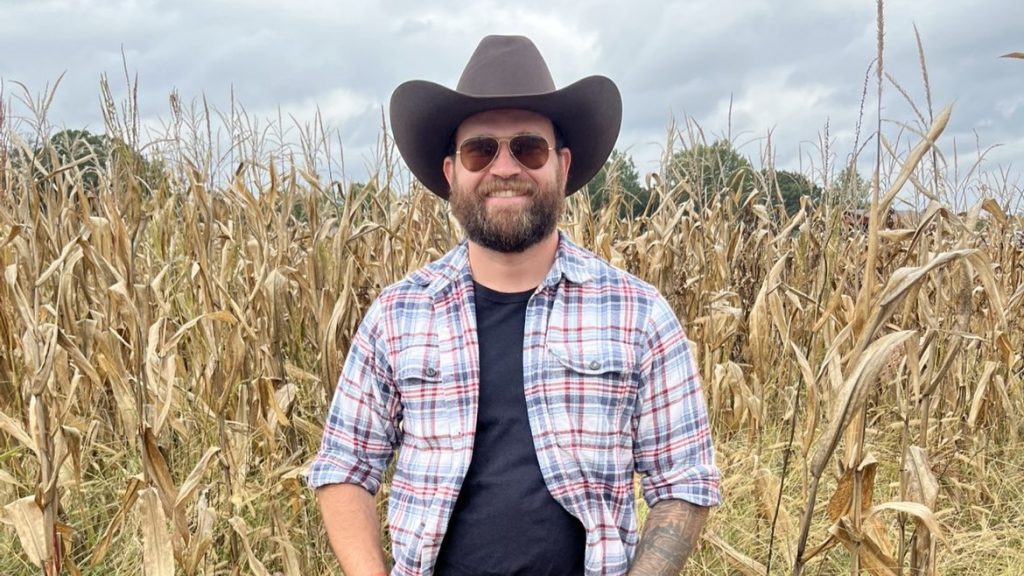
Matthew Crawford has been active in the Mizzou chapters of the Alpha Epsilon and Tau Beta Pi engineering honor societies, Tau Sigma transfer honor society, Phi Theta Kappa and SALUTE veterans honor society. He has been a peer learning advisor and a member of the 3D Printing Club and the Biomedical Engineering Society. He graduates summa cum laude in December 2025 with a bachelor’s degree in biomedical engineering
From an early age, I was fascinated with engineering.
I was always taking things apart, building new things and trying to understand how the world worked: Building a tennis ball catapult from scrap lumber, building tasers from disposable cameras, or using a battery to isolate hydrogen and oxygen from an electrolyte solution. I was extraordinarily lucky that I never hurt myself or others.
I didn’t think I was smart enough for engineering.
In high school, I was never interested in academics. I graduated a semester early and enlisted in the Marine Corps. I attained the rank of sergeant and served as an infantry squad leader, responsible for the lives, personal and professional development of the 12 men in my charge. I left the service in 2019.
I worked as a heating, ventilation and air conditioning technician.
On one of my calls, I forgot to reconnect a customer’s air conditioning compressor — a costly mistake which rendered the homeowner’s system unusable. The company I was working for replaced the compressor free of charge. I wasn’t disciplined, but I was embarrassed and began to doubt myself as a technician. Something needed to change, so I decided to step outside of my comfort zone and into engineering.
As a disabled veteran, I wanted to give back to the veteran community.
I knew that amputations were life-altering, prosthetic devices needed improvement and that my status as a veteran would allow me to connect with patients on a deeper level. It seemed natural that a degree in biomedical engineering would allow me to harness my skills and exercise my creativity while giving back to the veteran community.
In boot camp, we had a saying: “Live chow to chow.”
We would break our training into smaller, more manageable units. It’s much easier to make it to the next mealtime than it is to make it through the next three months. The next time you’re feeling stuck or disheartened at the amount of time left in your degree or at the number of assignments you have, focus on getting through the next assignment, the next exam, the next week or even the next class period. You’ll be surprised at how quickly the days turn to weeks, the weeks to months, the months to semesters and the semesters into a degree.
In January, I will join health care company Solventum as a manufacturing engineer.
My summer 2025 internship with Solventum was the first time that I truly felt like an engineer, so when they offered me full-time position at the end of the semester, I accepted. Working as an engineer in medical drug and device manufacturing has only strengthened my passion for helping people and learning.
My time at Mizzou is drawing to a close, but I’m only getting started.
I came to Columbia to complete my education, but I also found a career, the love of my life, great friendships and an unquenchable passion for knowledge and learning.