May 18, 2026
Mechanical engineering students designed an elevator to move firewood and other heavy loads from ground level to deck height safely and easily.
Mizzou Engineering students are immersed in hands-on learning experiences to prepare them for future careers. Senior capstone projects are one of those examples to help students use teamwork, problem solving and innovation to confront real-world problems.
This semester, a team of mechanical engineers designed and built a device to move large amounts of firewood safely and easily.
Team
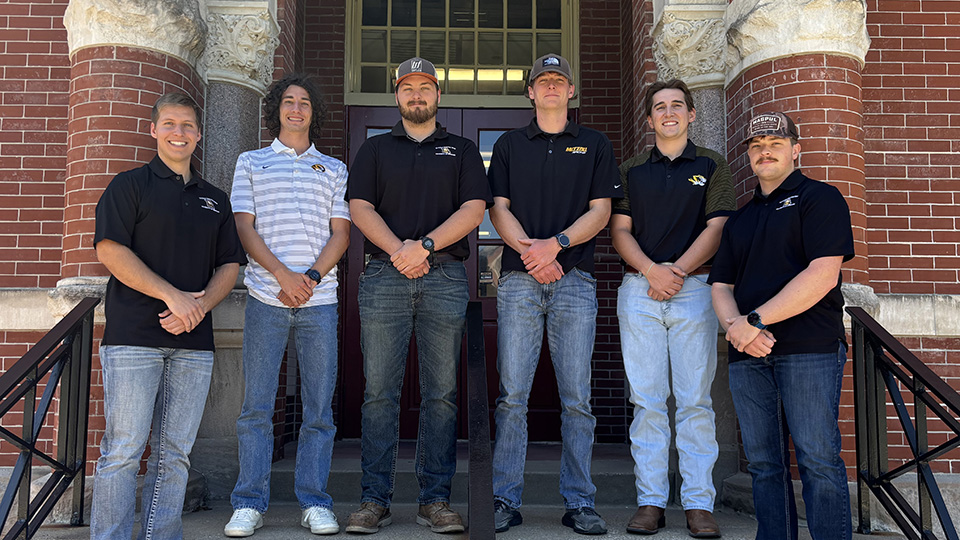
Andrew Kabrick, Trevor Blanken, Jacob Lakenburger, Ben Higgins, Noah McMullen and Jack Knop
Challenge
Our team aimed to design a device capable of transporting large quantities of wood from ground level to the height of a deck. The goal was to save time and reduce the risk of injury associated with manually carrying heavy loads up steps. Additionally, the device was intended to transport other heavy objects, such as BBQ grills or furniture, making movement of bulky items safer and more convenient.
Process
To define the design requirements, we consulted with our client to identify the maximum weight, size limitations and operating conditions for the elevator.Once requirements were established, our team brainstormed preliminary concepts, created rough models, estimated material costs and presented our ideas to the client.
Together, we agreed that the deliverable product would be a set of detailed design plans. We then performed stress and force analyses to ensure that the design was both feasible and compliant with relevant standards. Once verified, we developed detailed part and assembly drawings for manufacturing and prepared a construction work plan to streamline fabrication.
Results
The result of our project was a complete elevator design that meets the ASME A17.1 and 2015 IBC standards. The design includes detailed manufacturing plans and construction guidance, ensuring that the elevator could be fabricated and assembled efficiently and safely.
Lessons learned
Throughout the project, our team learned the importance of time management, clear communication and iterative design. We gained experience in interpreting and applying complex industry standards and learned how to adapt our design decisions to meet regulatory requirements. The project strengthened our skills in collaboration, problem-solving and product development.
Conclusion
Mizzou Engineering provided a foundation of critical thinking, problem-solving and technical knowledge that was essential for this project. Courses like Strength of Materials and Machine Element Design prepared us to calculate and interpret stresses in components, informing material selection and sizing. Participation in engineering clubs also helped us develop teamwork and project management skills, particularly in situations requiring compliance with standards and collaborative product development.
This capstone project was an invaluable experience in bridging classroom knowledge with practical application. It reinforced the importance of rigorous analysis, standards compliance and iterative design while allowing us to create a product with tangible real-world value.
Discover more Mizzou Engineering capstone projects!