July 07, 2026
Mizzou researchers are transforming autism assessment with a smartwatch-based system that objectively measures social interaction in everyday life.
For decades, one of the major challenges in autism research has been not only developing effective treatments but also establishing reliable ways to measure whether those treatments actually work. Now, a team of Mizzou researchers is working to change that.
Led by Fang Wang of the Department of Electrical Engineering and Computer Science and David Beversdorf and Bradley Ferguson of the School of Medicine, this interdisciplinary effort brings together engineering, medicine and clinical research to create a practical, scalable solution that objectively measures social interaction in everyday life.
Autism spectrum disorder (ASD) affects as many as one in 31 children in the United States, according to the Centers for Disease Control. Many clinical trials focus on overcoming social communication challenges, but without reliable measurement tools, promising therapies can appear ineffective.
Researchers and clinicians have typically relied on caregiver reports, short interviews and brief observations in clinical settings to evaluate social behavior in individuals with ASD.
“Traditional methods often rely on caregiver reports or clinician observations,” Wang said. “They can be subjective, time-consuming and limited to clinical settings.”
This gap has serious implications. Inaccurate or inconsistent measurements can lead to failed trials, delaying new treatments and increasing costs by millions of dollars. It also leaves families and clinicians without clear insight into whether interventions are making a difference.
The team’s solution is simple: Use technology people already wear.
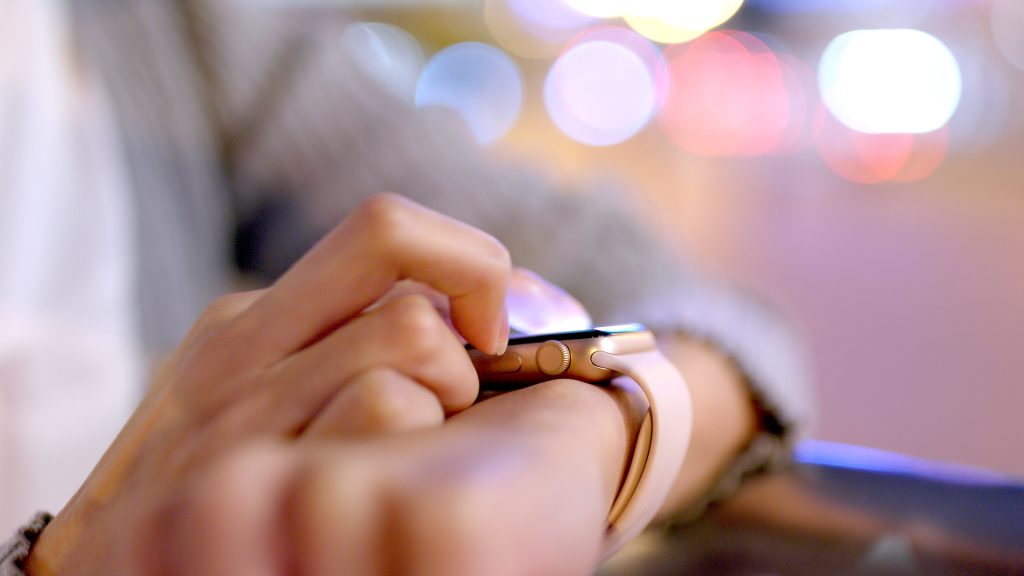
Building on a 2021 grant from the MU Coulter Biomedical Accelerator, the researchers developed a system that pairs a smartwatch with cloud-based analysis. The watch records audio and heart rate during normal daily activities at home, at school or in the community. Then, machine learning does the heavy lifting.
“The smartwatch automatically captures audio segments,” Wang said. “We use algorithms to distinguish the wearer’s voice from others, allowing us to quantify patterns of social interaction.”
In practical terms, the system can answer basic but powerful questions: How much does someone speak during a conversation? How often do they take turns with others? How does their speaking behavior change over time?
Behavior meets biology
Unlike traditional evaluations, this data is collected continuously and in real-world environments, offering a far more accurate picture of social behavior.
In a study recently published in IEEE Access, the team demonstrates that the system works not just in theory, but in practice. Tested in both controlled settings and real-life environments, the technology showed high accuracy in identifying who was speaking and for how long.

More importantly, it reduces the burden of manual assessment. Instead of clinicians spending hours observing and scoring interactions, the system generates clear, objective summaries automatically.
Those summaries appear in a secure dashboard, where clinicians can quickly review patterns and trends without ever listening to raw audio, preserving privacy while still delivering actionable insights.
The research has already moved beyond speech and is now expanding the platform to include physiological data, such as activity in the autonomic nervous system. By combining speech patterns with indicators like heart rate, researchers hope to better understand how stress, anxiety and physical health interact with social behavior.
This next phase of work — being tested at MU’s Thompson Center for Autism and Neurodevelopment — aims to provide a more complete picture of how individuals with ASD experience and respond to the world around them.
The team is also thinking beyond academia. Through the National Science Foundation’s I-Corps program, Wang and her colleagues have interviewed clinicians, researchers, educators and families to understand how the technology could be used in real-world settings.
“This technology will accelerate autism research and improve the quality of care,” Wang said. “By providing objective, real-world data, we can better understand individual patterns and track meaningful change over time.”
A model of interdisciplinary innovation
The project also highlights the collaborative environment at Mizzou.
“Bringing together different areas of expertise allowed us to tackle a complex problem that none of us could solve alone,” Wang said.
At its core, this work addresses a simple but critical need: understanding human interaction in a way that is objective, scalable and grounded in real life.
By turning everyday devices into powerful research tools, Mizzou researchers are helping bridge the gap between the clinic and the real world — offering new hope for better treatments, more efficient research and improved lives for individuals with autism and their families.
Interested in aligning engineering solutions with society’s greatest needs? Join our faculty!