May 18, 2026
Industrial engineering students developed an augmented reality module to save Unilever time and money during onboarding.
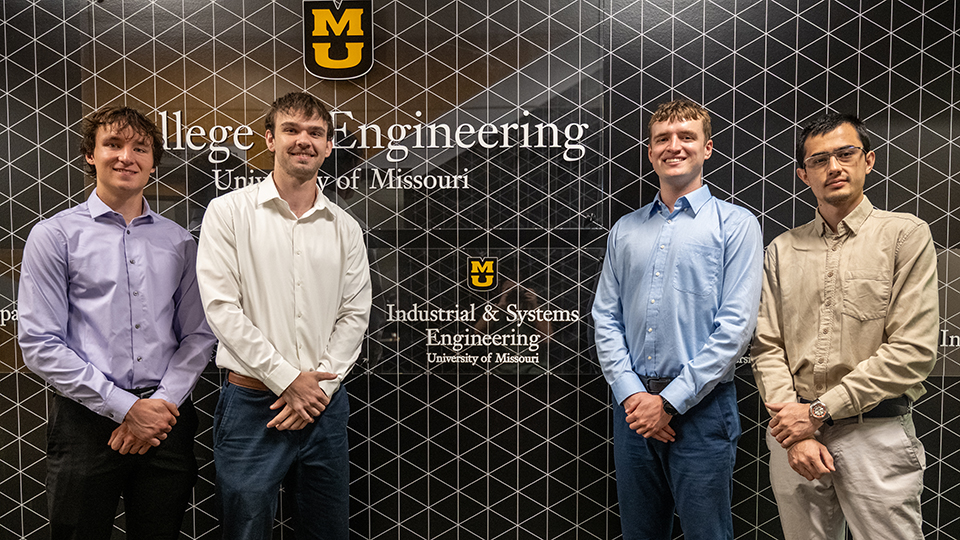
Hands-on learning defines the Mizzou Engineering experience. At Mizzou Engineering, hands-on learning is central to the student experience. Through capstone projects, students help solve real-world problems while honing their technical, critical thinking and collaborative skills.
This semester, three industrial engineering students partnered with Unilever to streamline the company’s onboarding process.
Team
Abbosjon Abdullaev, Ryan Dodson, Dylan Kracht and Thomas Willerth
Challenge
Our project was with Unilever’s manufacturing plant in Independence, where they produce soups, sauces and bouillons for Knorr. They have issues with consistency in their training process, as their on-the-floor training is done entirely by other operators (called shadow training), leaving the door open for human errors and inconsistencies in the training process. Specifically, generalized onboarding takes 60-75 days, which pulls highly skilled operators off the line for months at a time. Compounding this bottleneck is a 30% turnover rate within the first 90 days, meaning a massive portion of that training investment is lost in a few months. Unilever wanted a solution to homogenize the training process to decrease errors, limit turnover and get veteran operators back to independent production.
Process
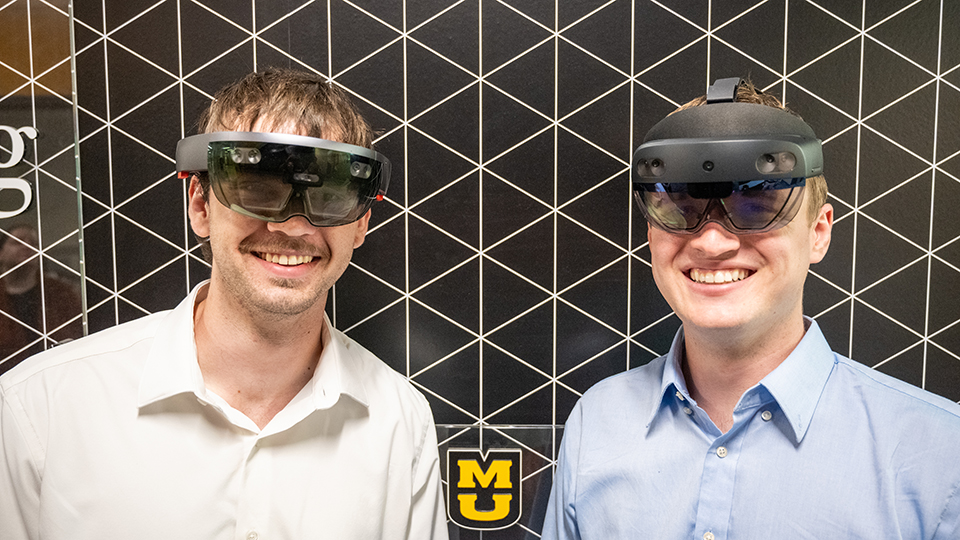
We learned about the jobs that we were tasked with creating training solutions for, specifically targeting four critical procedures: Lock Out Tag Out (LOTO), First Case Check, Dry Clean Align and Downfeed. We read over the work instructions for each of these tasks to evaluate how an operator might be trained. We then compiled statistics on the current state of costs, turnover and possible gains, isolating 132 hours of shadow training tied to these four tasks. From there, we evaluated different hardware alternatives, selected the Microsoft HoloLens and built out the augmented reality (AR) modules using the Unity game engine. Finally, we designed the phased implementation plan.
Results
We created AR modules that will supplement training to limit shadow training time and maximize independence on the floor while maintaining strict OSHA safety standards. These modules act as a digital poka-yoke (mistake-proofing) system that forces procedural compliance, which will in turn increase training quality and reduce product scrap.
Quantitatively, eliminating the human shadow trainer for these 132 hours across 60 annual new hires reclaims $34,320 in lost production labor and premium payouts per year. Because the capital expenditure to procure five headsets is only $10,000, our solution pays for itself in less than a year. If modules were coded to cover every task plant-wide, there is a projected facility-wide savings potential of over $150,000 annually.
Lessons learned
We learned that implementing emerging technology in a factory requires much more than just creating AR modules. It requires a deep understanding of human factors and real-world constraints. On the technical side, we had to learn Unity 3D development, Microsoft HoloLens deployment, and the OpenXR framework.
Beyond the software, we learned how to navigate rigid industrial constraints, such as ensuring our modules didn’t violate OSHA regulations, managing capital expenditure budgets and designing a phased rollout.
Conclusion
We are incredibly proud to have delivered a highly scalable Industry 4.0 solution. By consciously choosing to build our software in the cross-platform Unity OpenXR framework, we not only provided a solution for Unilever’s training problems today, but also future-proofed their investment. If they want to upgrade to a competitor’s headset in two years, our software architecture is already prepared to handle it. It has been incredibly rewarding to see our capstone translate into a real-world impact.
Discover more Mizzou Engineering capstone projects!