Faculty Careers at Mizzou Engineering

A time of growth

Mizzou Engineering is entering a new era of expansion. With Dean Marisa Chrysochoou joining in 2024, the College launched a faculty growth campaign through MizzouForward, aiming to add 30 tenure-track faculty by 2030.

This effort expands our strengths in research and innovation at the energy–materials–information nexus, aligning engineering solutions with society’s greatest needs.

As Missouri’s flagship and an AAU Tier 1 Research University, Mizzou is one of only six universities nationwide that can claim schools or colleges of medicine, veterinary medicine, agriculture, engineering, arts and science, and law—along with a powerful research reactor. This breadth of excellence, combined with scale and support, creates unmatched opportunities for collaboration and impact.

We invite you to be part of this momentum.

MizzouForward

MizzouForward, a strategic investment to achieve research excellence and student success at the University of Missouri, leverages existing institutional strengths and addresses national health and scientific priority areas through innovation and collaboration.

Explore our openings:

Lafferre Hall

MizzouForward Focus Areas

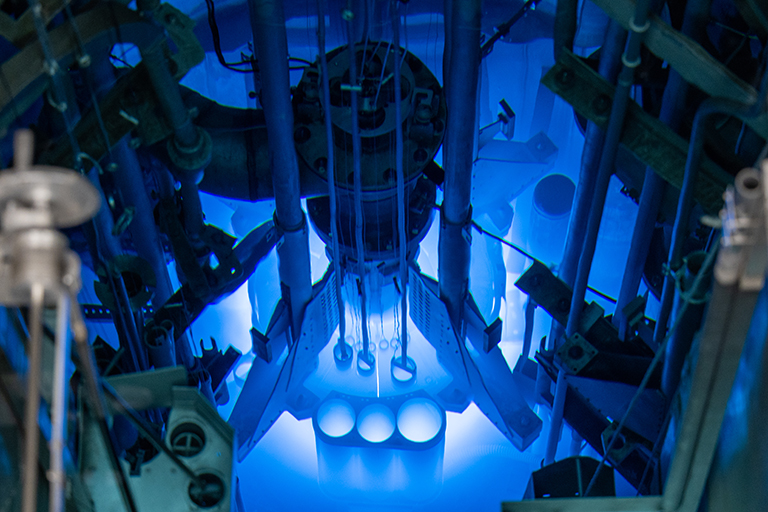
Nuclear reactor

Nuclear Engineering and Energy Materials Engineering

The University of Missouri has established a growing national presence in nuclear materials and engineering, bringing together expertise in nuclear fuels, structural materials, radiation effects, reactor systems, and materials performance in extreme environments. Research efforts span both experimental and computational approaches, with an emphasis on understanding and advancing the materials that underpin current and next-generation nuclear technologies.

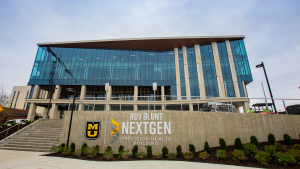
A defining advantage is the close connection to the University of Missouri Research Reactor (MURR), which provides unique capabilities in neutron irradiation, isotope production, neutron science, and nuclear materials research. These resources create opportunities to investigate material behavior under irradiation, develop advanced nuclear materials, and address fundamental challenges in reactor performance and longevity. The planned NextGen MURR will further expand these capabilities, creating new possibilities for research, innovation, and collaboration in nuclear science and engineering.

The nuclear materials and engineering community at Missouri is strengthened by extensive characterization, imaging, and computational resources, as well as interdisciplinary partnerships that connect engineering, physical sciences, and applied research. This environment supports the development of innovative solutions across the nuclear fuel cycle while advancing the materials and technologies needed for a secure, reliable, and sustainable energy future.

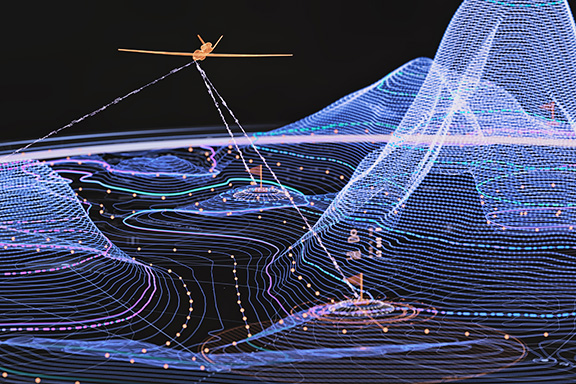
Advanced drone control interface showing digital topographic map and target acquisition.

Geospatial Intelligence

The University of Missouri’s Center for Geospatial Intelligence (CGI) serves as a hub for interdisciplinary research at the intersection of geospatial science, advanced computing, and national security. Research spans satellite, airborne, and ground-based remote sensing; artificial intelligence and computer vision; autonomous systems; data fusion; high-performance computing; change detection; and surveillance. Researchers benefit from a collaborative environment with established federal partnerships and specialized facilities designed to support advanced geospatial research and technology development.

Geospatial intelligence research at Missouri is distinguished by its integration of artificial intelligence and advanced analytics to address complex real-world challenges. Opportunities for collaboration extend across disciplines and application areas, including environmental monitoring, infrastructure resilience, autonomous systems, and data-driven decision-making. The university’s strengths in AI, computing, and geospatial analysis create a foundation for innovative research that advances both fundamental methods and practical applications.

The broader research ecosystem further enhances these efforts through collaborations with the AI Education, Research and Infrastructure (AERI) Center, the Center for Cybersecurity, and the Quantum Innovation Center. Researchers also have access to robust computational and visualization resources, including the Hellbender high-performance computing environment and immersive analytics capabilities, supporting large-scale data processing, modeling, and visualization at the forefront of geospatial intelligence research.

Faculty Positions

Founding Director, Energy Innovation Center; Full Professor
Direct a transformative, state-of-the-art initiative shaping the future of energy research, technology, policy and workforce development. The position offers a unique opportunity to build a nationally-recognized hub for interdisciplinary innovation, bringing together academia, industry and government partners to address critical energy challenges and drive lasting impact for Missouri and the nation.

Director, Quantum Innovation Center; Associate or Full Professor
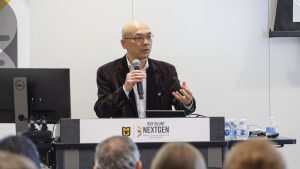
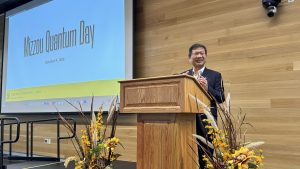
Lead the future of quantum research and innovation as the inaugural Director of Mizzou’s Quantum Innovation Center, an interdisciplinary hub advancing quantum computing, workforce development, and strategic partnerships. This unique opportunity combines visionary center leadership with a tenured faculty appointment and the ability to shape MU’s growing national presence in the quantum ecosystem.

Assistant Professor in Quantum Optimization, Industrial and Systems Engineering
Help shape the future of quantum-enabled solutions for complex systems in areas such as energy, health care, manufacturing and transportation. The successful candidate will have access to Mizzou’s Quantum Innovation Center, one of only four IBM Quantum Innovation Centers in the United States.

Apply Below.

About Mizzou

The University of Missouri was established in 1839, making it the first public university west of the Mississippi River, and is a land-grant institution and a member of the prestigious Association of American Universities.

Campus is home to more than 31,000 students from all 50 states and more than 100 countries.

Quad

The Flagship Campus

Mizzou is the flagship campus of the UM System, which also has campuses in St. Louis, Kansas City and Rolla. The system serves all 114 counties in Missouri and generates billions of dollars of economic impact for the state.

Students on campus

Explore Columbia

Columbia, Missouri, is consistently ranked as one of the top college towns and best places to live in the U.S by Money magazine, Fortune magazine, U.S. News & World Report and others. The city is home to major employers, high-quality schools, a regional airport, numerous parks and trails and national festivals, all while proving to be less expensive than the national cost of living average. Explore more reasons we call CoMo home.

Columbia at dusk