July 12, 2026
Roseanna N. Zia studies how ribosomes transform matter into life and how that capability can build the next generation of life-saving medicines, materials and biodefense technology.
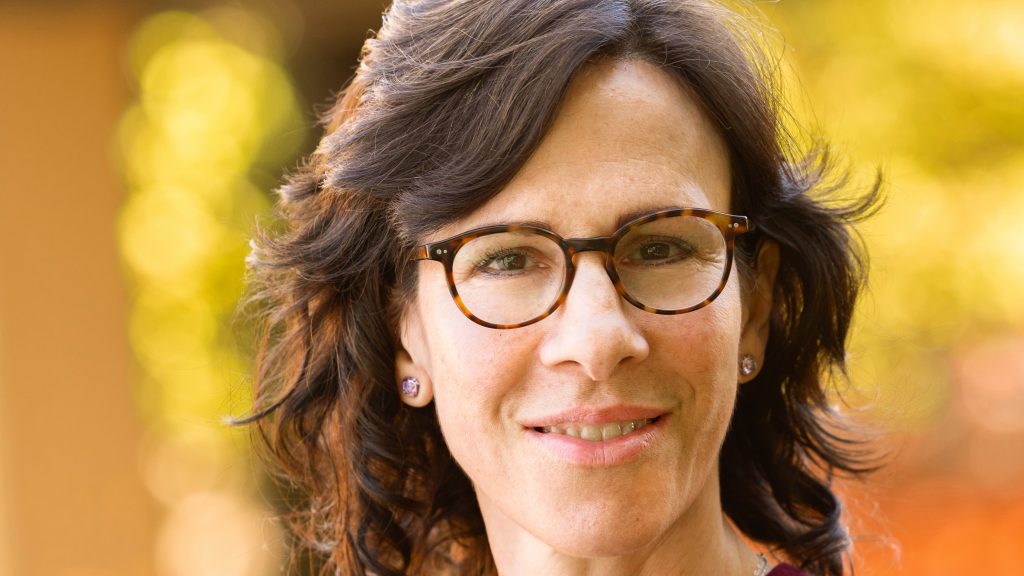
At Mizzou, world-class researchers collaborate across disciplines and explore paths that redefine traditional thought, push boundaries and engineer a better world.
One such researcher is Roseanna N. Zia. The Dave Wollersheim Professor of Mechanical and Aerospace Engineering, she builds working digital models of biological cells to explore how cells organize, function and build themselves.
These detailed, dynamic blueprints enable her lab and others to engineer cells, new therapies, smarter biotechnologies and deeper insight into the nature of life itself. In recognition of her advances, Zia was recently awarded over $2.3 million in research funding to leverage artificial intelligence (AI) for developing faster, more accurate computational models of whole, living cells.
Tell us about your prestigious grant from the Alfred P. Sloan Foundation.
The Sloan Foundation awarded my lab $825,000 to develop a multi-scale cellular model that captures synthesis of one of the two subunits that comprise a ribosome.
Sloan’s Matter to Life (MTL) Program seeks to answer one or the most fundamental questions in science: What brings matter alive? As the MTL Program notes, humanity’s understanding of the physical world encompasses both the history of the universe and the elemental building-blocks of matter itself. Yet we still lack a comparably deep understanding of how those building blocks give rise to life.
With the Sloan grant, I will look specifically for how physics combine with biochemistry in ways that are unique only to living matter. We’ve already uncovered evidence of this with our early Sloan Foundation funding, and now we are expanding that search to really focus in on specific processes in cells that we think are the root, or nexus, of this matter-to-life transition.
This is the culmination of a high risk/high-reward idea that is now bringing very impactful results and international attention, thanks to the Sloan Foundation and Dr. Ernie Glover, the program director who believed in this work when it was too high risk for funding by traditional federal agencies.
Where do you start?
With biological cells. Nothing simpler lives. Within them, ribosomes are the hero of transforming matter to life: they turn non-living chemicals into proteins, the workhorse molecules that perform most of the functions that make cells live.
Proteins are put together in a very specific way, with instructions from our DNA to do metabolism, make cells grow, protect from infection, block cancer, and pass all that along to the next generation. This complex process is unique to life.
The ribosome is the factory that builds life. Our question is, how does the factory that builds life get built?
So, putting proteins together is as much about physics as it is biochemistry.
Yes. Inside cells, millions of biomolecules are whizzing around trying to find each other. It’s a chaotic, crowded environment, like a train station at rush hour. It looks like a madhouse, but every person knows where they need to go, and they get there despite a lot of obstacles and some missteps.
The physics of this searching is key to how the cell regulates itself. But capturing atomistic physics in cell models with billions of atoms is well beyond the capabilities of traditional techniques.
What’s new about our approach is how we represent the cell’s biomolecules and let them interact with near-atomistic accuracy. Due to advances in artificial intelligence, new AI tools, my lab can create fast models trained on physics-based ground truth, and what we can do in an afternoon would take years with traditional models.

You also received nearly $1.5 million from the Defense Advanced Research Projects Agency (DARPA).
The DARPA award will enable my lab to take ribosome modeling a step further and help ribosomes build new proteins that can treat cancer, combat viruses, chew away biofilms, protect us from biotechnology threats, produce stronger crops and more.
But the ribosome wants to make only what it has always made; nature has evolved countless layers of complexity into cells to resist changes. We have to work with the ribosome to tease out accommodation of custom-designed sequences without interrupting basic functions.
What will society get out of all this work?
Building a physics‑based, whole‑cell model will help us explain — and eventually predict — how living cells build themselves. And it will be very useful.
It’s a blueprint that will enable us to design cells like we design machines, predict how to disrupt harmful bacteria, build medicine-producing synthetic cells, help our farmers improve crop yields, and more.
This would redefine what is possible in biotechnology, medicine and materials science, and ultimately give us deeper insight into how life originates and evolves. The potential for profound understanding and profoundly useful technology.
This work is helping us understand the world around us in a deep way. At the same time, it will become everyday technology that helps all of us in our daily lives, maybe even as transformatively as the advent of antibiotics.
How does the research environment at Mizzou enable your work?
The intellectual community here is ideal for ambitious, cross‑disciplinary, high‑risk/high‑reward science like we are doing. MU has a very collaborative culture where engineering can merge with the life sciences, the School of Medicine, and with MU’s extensive outreach to help a lot of Missourians with our discoveries.
Part of that research environment is our partners in Engineering support roles, like Erin Teeple in Human Resources, and Nancy Baker in Research Administration, who are truly our partners in recruiting world-class talent into our labs and applying for grants that fund our work.
Thanks to people like them, Mizzou researchers have the freedom and institutional support to pursue original ideas and develop new methodologies that ultimately lead to real-world applications. And that’s what engineering is all about.
Interested in collaborating on or supporting this research? Write to rzia@missouri.edu.
Approved for Public Release, Distribution Unlimited