August 17, 2026
Students from across Missouri explored artificial intelligence, cybersecurity, robotics, environmental engineering and more while discovering what it means to be an engineering leader.
At Mizzou Engineering, the Missouri Method means learning by doing. Through hands-on experiences, mentorship and access to cutting-edge technology, the College of Engineering inspires young learners to become innovators, problem-solvers and leaders who will shape tomorrow’s world.
This summer, students from across Missouri came to Mizzou Engineering to explore coding, cybersecurity, robotics, environmental sustainability and other engineering disciplines through eight STEM-focused youth camps.
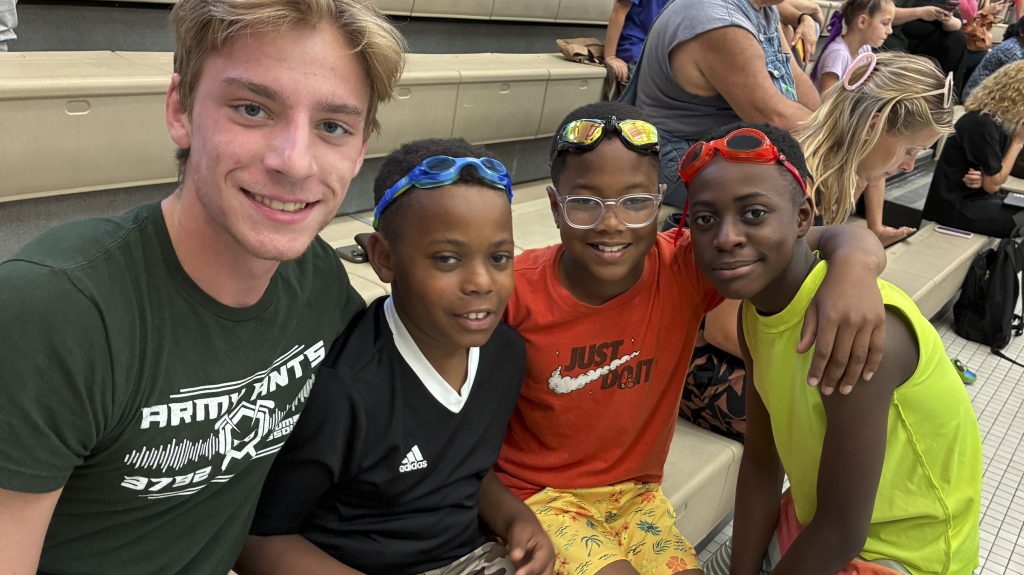
Among them were eighth grader Barima Eshun, fifth grader Amir McKinnon and fifth grader Caden Ruffin, who were enrolled in the Underwater Robotics Camp.
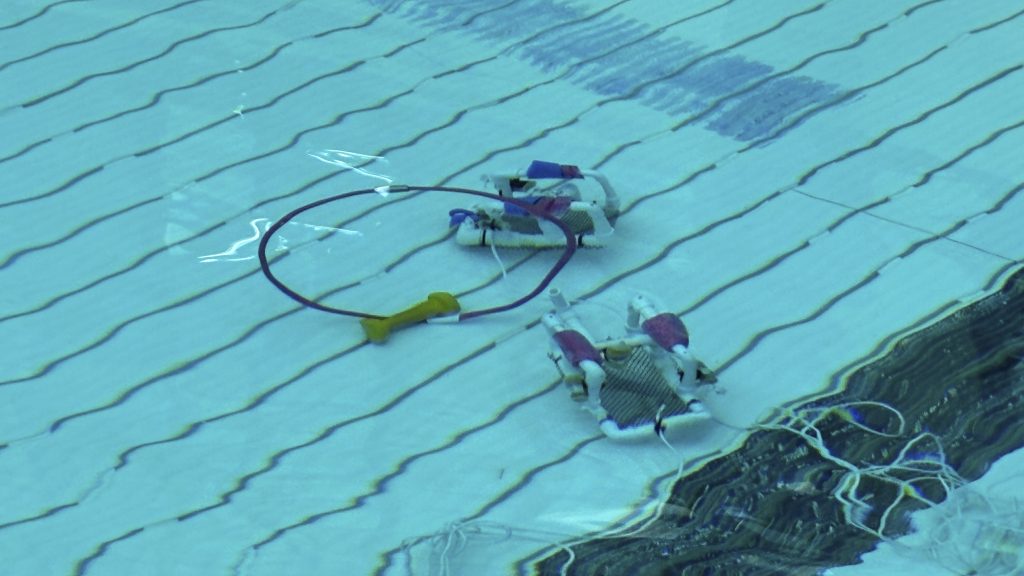
Nearly 50 campers gathered at MizzouRec’s 50-meter pool to test robots they had built of battery powered propellers, PVC tubing and pool noodles. Eshun, McKinnon and Ruffin took turns piloting their robot, which they had named Junebug.
“The thing I like about it is making the robot from scratch,” Eshun said. “I haven’t done that before.”
Ruffin maneuvered Junebug in a holding position, waiting for another team’s robot to clear a plastic hula hoop anchored to the bottom of the pool and taking care not to get entangled in the other robot’s umbilical.
“It’s hard to get it back through the ring,” Ruffin said. “There’s a lot of stuff to get snagged in.”
Problem-solving was a primary focus of all the camps.
“We want students to begin seeing themselves as future engineers and leaders,” said Professor Kevin Gillis. “They’re designing, building, testing and solving problems while gaining confidence in their ability to make a difference.”
AI as a Tool for Future Engineers
AI as a Tool for Future Engineers introduced middle school and high school students to machine learning through real engineering problems and an AI-assisted coding approach.
Using Google Colab and the Gemini coding assistant, campers learned a step-by-step workflow for applying machine learning to engineering problems and employed AI tools to lower the barrier to programming. This approach allowed campers to focus on understanding the engineering problem, working with real data and building predictive models.
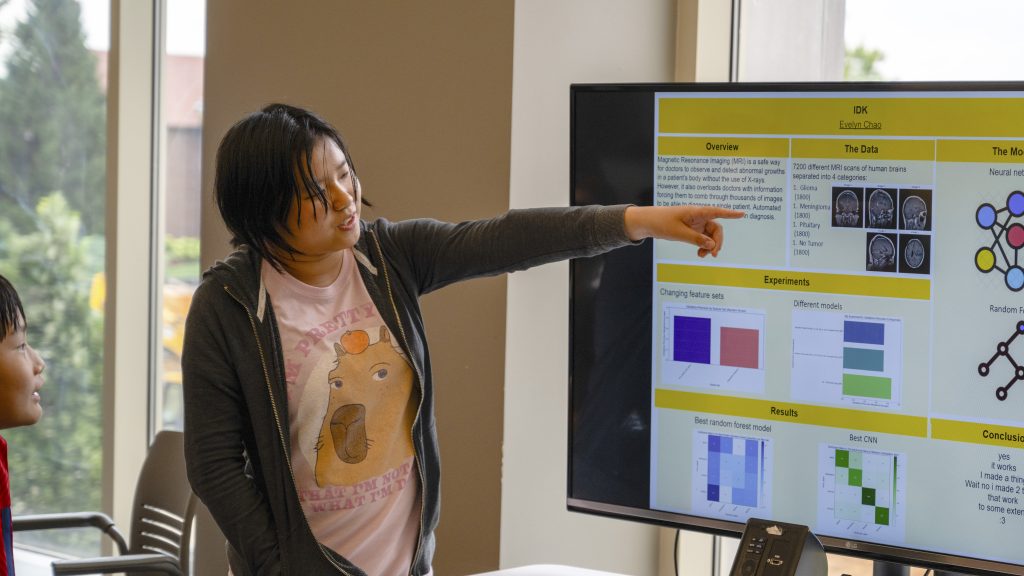
“Students developed models to predict air quality, chemical reaction conversion, and jet engine reliability and classify medical images and everyday objects for computer vision applications,” said camp organizer Campbell Sweet, a graduate student and NSF Graduate Research Fellow at Mizzou Engineering.
AI and Neuro-Robotics
High school students explored foundational concepts in artificial intelligence and data science through interactive coding exercises and machine learning projects. Along the way, they learned how algorithms influence technologies ranging from social media platforms to autonomous vehicles.
Campers also experimented with different machine-learning architectures and programmed robots to address engineering problems.
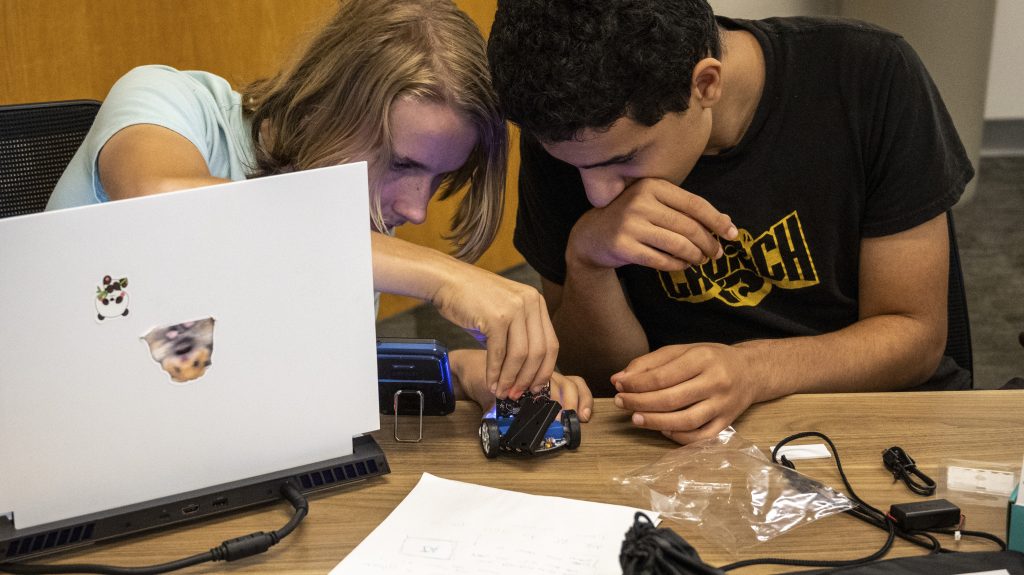
“This camp helps students build a foundation for understanding emerging technologies,” said Professor Satish S. Nair, who helped organize the camp. “By engaging directly with AI concepts and applications, they begin developing skills that will be valuable throughout their education and future careers.”
“It’s an opportunity to reveal the science and mathematics behind technologies students use every day,” co-organizer and undergraduate researcher Shokhsanam Uktamova said. “We also want them to leave with a better understanding of the learning pathways available if they decide to pursue AI and related fields.”
Additionally, Mizzou Engineering hosted five students from the Illinois Mathematics and Science Academy June 14-27 for a research experience in neuro-AI architecture for learning and control.
Experiencing Environmental Engineering
Led by Associate Professor Maryam Salehi, this camp challenged middle school and high school students to tackle real-world environmental issues. Campers designed solutions to mitigate agricultural plastic pollution, including recycling programs and composting of biodegradable plastic mulch.
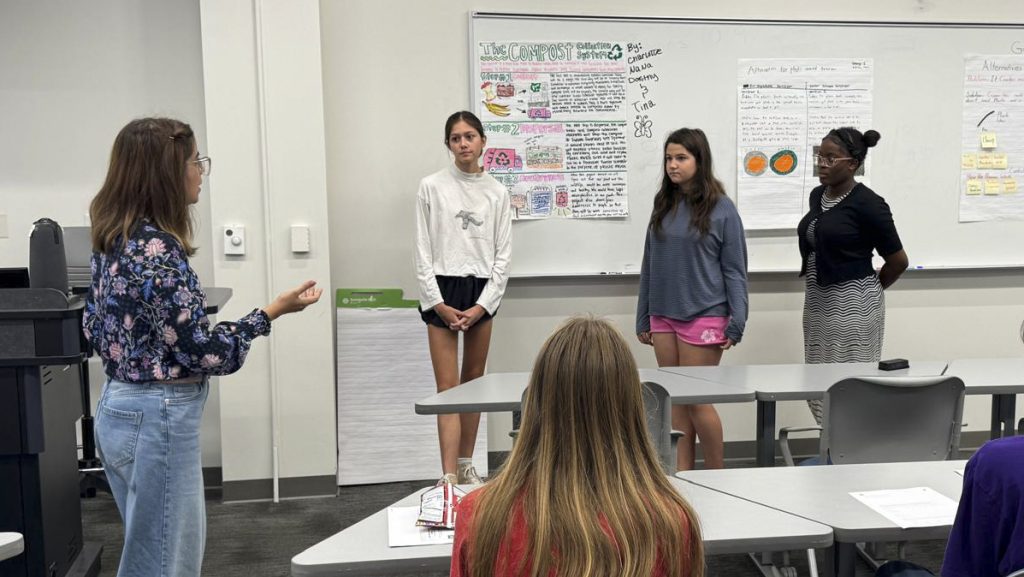
“We want students to recognize that engineers play a vital role in protecting natural resources and improving communities,” Salehi said. “By applying creativity and critical thinking, they can develop solutions that make a meaningful impact.”
Experiencing Electrical and Computer Engineering
Participants explored the fundamentals of electrical engineering and electronics while gaining hands-on experience with electrical circuits, microcontrollers, embedded systems and the C programming language. Students also became familiar with foundational electronic components and technologies, including CMOS and BJT transistors, and gained an introductory understanding of silicon fabrication and the principles behind designing modern computer processors.
Through interactive projects, demonstrations and laboratory tours, campers further explored AI-powered technologies and robotics, connecting fundamental engineering concepts to real-world applications and emerging computing technologies. They also completed hands-on projects using Arduino boards, where they learned how to integrate AI into different applications and explore its potential for developing intelligent engineering systems. Beyond the technical activities, campers visited Mizzou Libraries and the MU Student Center, gaining a broader perspective on university life and experiencing how electrical and computer engineering connects with interdisciplinary education, research, innovation and the broader university community.
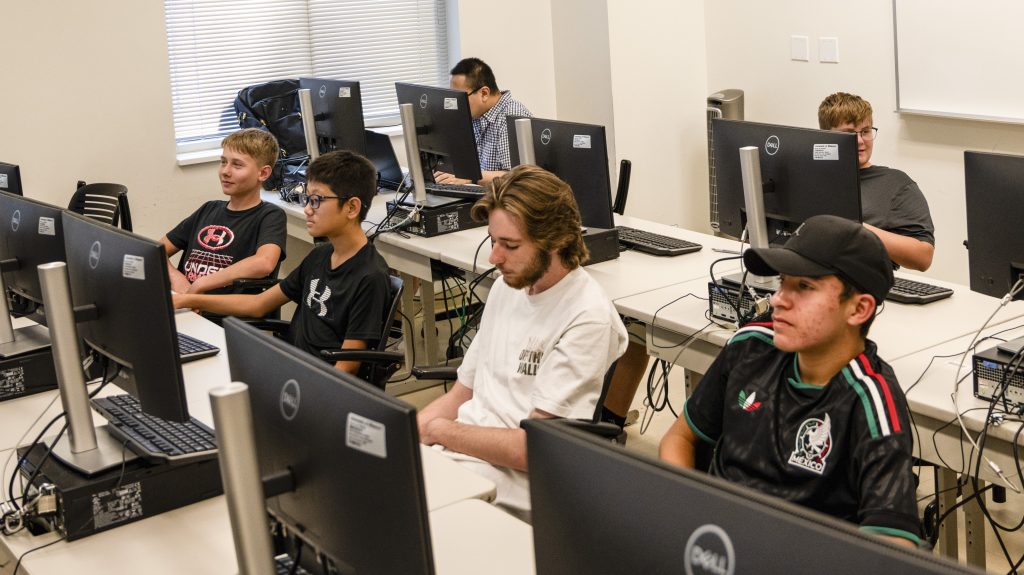
The camp aimed to help students understand how electrical and computer engineering powers modern life, while introducing them to the fundamentals of quantum computing and the emerging potential of Quantum AI, Assistant Teaching Professor Ali Shiri Sichani said. The experience enabled students to explore how quantum technologies can be integrated with AI to address future challenges and shape the next generation of computing.
“Our goal is to inspire students to see themselves not only as future engineers, but also as innovators and technology leaders who can bridge foundational engineering principles with emerging technologies such as artificial intelligence and quantum computing,” Sichani said. “By providing hands-on experiences and exposure to cutting-edge research, we want students to develop the curiosity, confidence and problem-solving skills needed to imagine and create technologies that can address real-world challenges and improve the world around them.”
Hacker Tracker Cybersecurity Camp
Over twenty middle and high school students learned how to defend systems, identify threats and think strategically during the camp led by Curators’ Distinguished Professor Prasad Calyam and AI engineer Roshan Neupane. Cybersecurity professionals from MOREnet and Magnet Forensics also shared real-world stories about cyber defense to protect critical infrastructure, and digital forensics to solve cyber-crime cases.
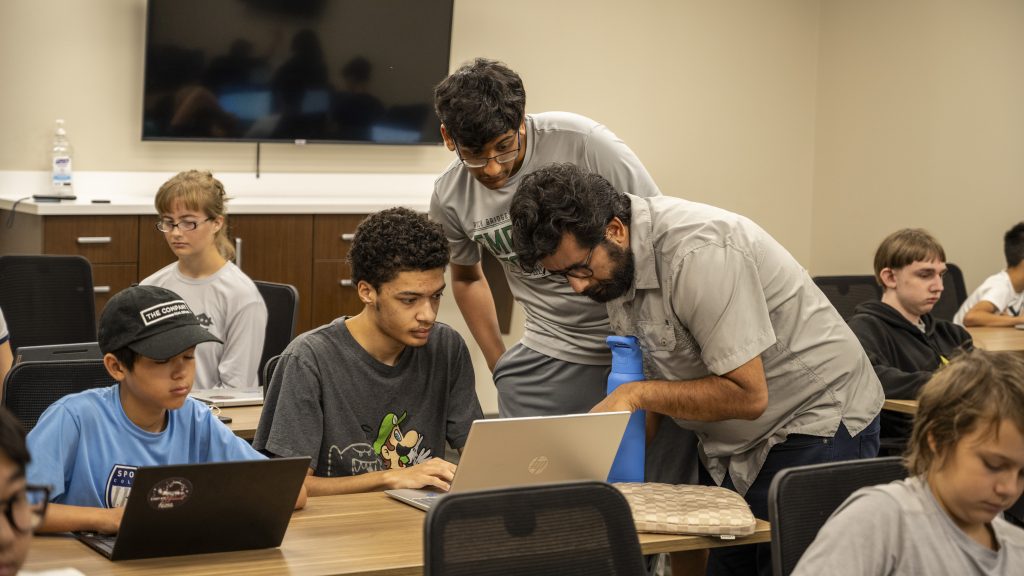
“Cybersecurity requires critical thinking, creativity and a strong understanding of how systems work together,” Calyam said. “Students gain early skills and also valuable insights into the challenges professionals face while protecting digital infrastructure and investigating cyber incidents.”
Participants were introduced to basic programming, database management and cloud computing concepts. Using a real-world active defense case study, they practiced network forensics, examined attack simulations and learned the fundamentals of ethical hacking.
Geospatial Science Camp
Students in grades 6-8 discovered how mapping technologies and spatial data can help address complex global challenges. They created interactive maps, analyzed satellite imagery and completed projects focused on local data collection and informed decision-making.
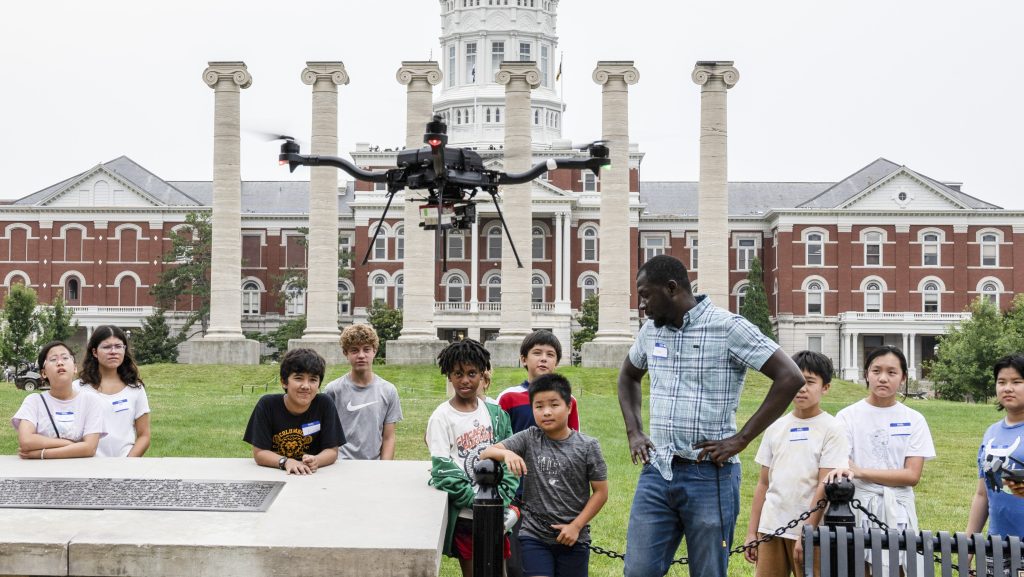
“Geospatial technologies are transforming how we address issues ranging from water resources and food security to urban development,” said Associate Professor Noel Aloysius. “It’s rewarding to see students develop the analytical skills and curiosity that can help them become tomorrow’s leaders in these fields.”
Game Development and 3D Modeling Camp
Under the guidance of Associate Teaching Professor Fang Wang and Assistant Teaching Professor Michael Tompkins, high school students used Unity, Blender and scripting tools to create their own video games.
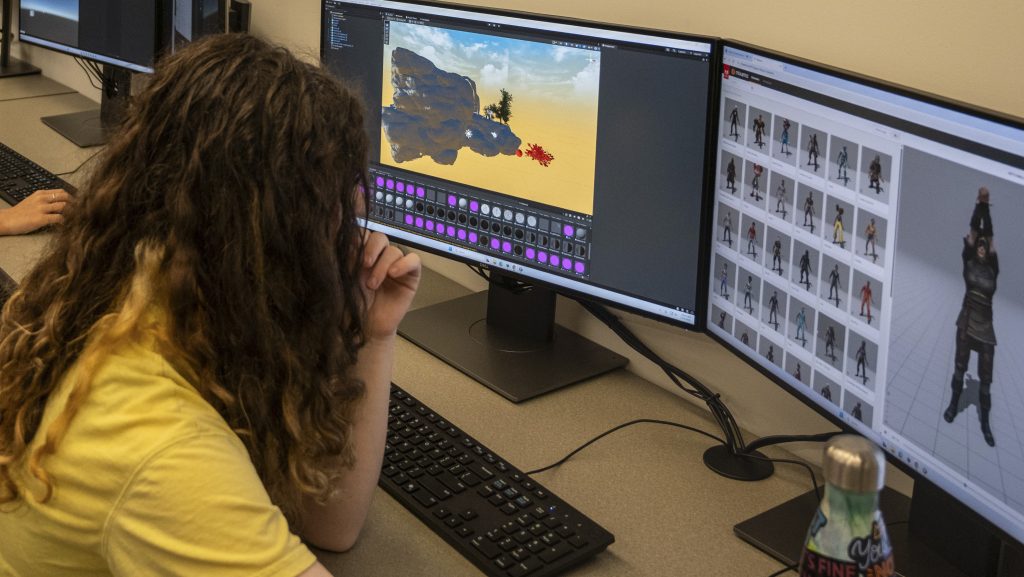
“Game development gives students an engaging way to build problem-solving, logical reasoning and design skills,” Wang said. “Watching them transform ideas into playable experiences helps them realize they have the creativity and technical ability to bring concepts to life.”
By the end of the week, students had developed playable prototypes and gained experience in the game design process.
Underwater Robotics Camp
One of the college’s most popular offerings, the Underwater Robotics Camp returned with two sessions to meet strong demand. Guided by Gillis and members of the Army Ants high school robotics team, students in grades 3-8 designed, built and tested remotely operated vehicles capable of completing underwater tasks.
“Engineering leadership often begins with learning from both success and failure,” Gillis said. “As students test and improve their robots, they develop resilience, teamwork and creative problem-solving skills that will serve them well in any field.”
Whether campers discovered a new interest or strengthened an existing passion, each program offered a glimpse into the possibilities within engineering and encouraged students to explore, experiment and grow.
“My favorite part is seeing the moment when a concept finally makes sense and a student realizes what they’re capable of accomplishing,” Gillis said. “That confidence and excitement can become the foundation for a lifetime of learning and leadership.”
Know an aspiring engineer who wants to build a better world? Register for fall camps starting in September!