Friday, Oct. 9, 2026
The State Historical Society of Missouri
Join researchers, industry leaders, students, government partners and the broader community for Mizzou Quantum Day 2026. The program will explore the rapidly evolving quantum technology landscape, the road toward large-scale fault-tolerant quantum computing, emerging applications and security challenges, workforce development and opportunities to prepare Missouri for the quantum era.
Attendees are welcome to attend in person or virtually.
Keynote speakers
- Dr. Oliver Dial, IBM Fellow, VP for Quantum Systems
- Dr. Aaron Kemp, Senior Director of Quantum Research, KPMG
Agenda
| Time | Schedule of Events |
|---|---|
| 8:30-9 a.m. | Check-in, light breakfast and networking |
| 9-9:15 a.m. | Welcome to Mizzou Quantum Day Campus leaders and QIC Executive Committee |
| 9:15-10:15 a.m. | Opening Keynote – “Building the Quantum Computing Present and Future Together” Dr. Oliver Dial, IBM Fellow and Vice President, Quantum Systems |
| 10:15-10:30 a.m. | Networking break |
| 10:30-11:30 a.m. | Quantum Industry Panel The Quantum Roadmap: From Today’s Systems to Large-Scale, Fault-Tolerant Computing Industry leaders discuss advances across quantum hardware and software, technology roadmaps, scaling challenges, and what will be required to build the emerging fault-tolerant quantum ecosystem. |
| 11:30 a.m.-12 p.m. | Mizzou Quantum Research: Student Innovation Showcase Highlights from the Mizzou QIC Summer Research Internship Program |
| 12-1 p.m. | Networking Lunch and and Quantum Research Poster Session Meet Mizzou students and researchers and explore projects from the QIC Summer Research Internship Program. |
| 1-2 p.m. | Afternoon Keynote – “Harvest Now, Innovate Now: Quantum’s Threat and Promise for the Enterprise” Dr. Aaron Kemp, Senior Director of Quantum Research, KPMG |
| 2-2:15 p.m. | Networking Break |
| 2:15-3:15 p.m. | Missouri Industry and Government Panel Quantum-Ready Missouri: Security, Workforce, and Competitiveness Missouri leaders discuss how government, industry, and higher education can prepare for the quantum era, from cybersecurity and emerging use cases to workforce development, economic opportunity, and Missouri’s long-term competitiveness. |
| 3:15-4 p.m. | Quantum Community Networking and Research Showcase |
| 4-4:15 p.m. | Mizzou Quantum Awards Quantum Hackathon winners and outstanding summer internship project awards |
| 4:15-4:30 p.m. | What’s Next for Quantum at Mizzou? Next steps and closing remarks |
Keynote Speakers

Dr. Oliver Dial
IBM Fellow and Vice President, Quantum Systems
Building the Quantum Computing Present and Future Together
Quantum computing is advancing rapidly, with progress across hardware, software, research, and real-world applications bringing the industry closer to quantum advantage. Through collaborations like the IBM Quantum partnership with the University of Missouri, researchers and industry are working together to advance the state of the art and demonstrate what quantum computing can achieve today. Join us to explore the current state of the quantum computing industry, key successes and lessons learned, and the opportunities ahead as we work toward quantum advantage and beyond.
Dr. Oliver Dial was named an IBM Fellow in 2021 for his contributions to quantum computing hardware. He is VP of Quantum Systems at IBM, ensuring IBM’s quantum hardware and software together deliver outstanding performance. Oliver received his PhD from MIT in 2007 for research in two-dimensional electron and hole systems. He then entered the field of quantum computing at Harvard, demonstrating the first two-qubit gate between semiconductor singlet-triplet qubits and performing pioneering charge noise spectroscopy in these systems. He joined IBM as a research scientist in 2012.
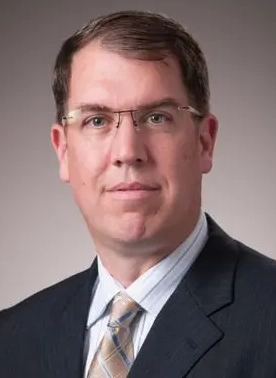
Dr. Aaron Kemp
Senior Director of Quantum Research, KPMG
Harvest Now, Innovate Now: Quantum’s Threat and Promise for the Enterprise
The quantum threat isn’t coming. It’s already here. Adversaries are collecting encrypted data today and holding it until a quantum computer can break it. Moving to quantum-resistant cryptography is a multi-year effort, and most organizations haven’t started.
But that’s only half the story. The same technology is opening real opportunities in optimization, machine learning, and simulation, the kinds of problems that drive cost, speed, and competitive advantage. Dr. Kemp will share what KPMG has learned working on today’s quantum hardware, where the early value is showing up, and what it tells us about timelines. Attendees will leave knowing how to manage the risk now and position themselves for the opportunity. The organizations that start now are the ones that will benefit.
As Senior Director of Quantum Research and US Quantum Lead at KPMG LLP, Dr. Kemp leads KPMG’s quantum computing research group, helping Fortune 500 organizations prepare for the impact of quantum technologies on cybersecurity, optimization, and enterprise strategy. His work spans three key areas: quantum optimization, quantum machine learning, and post-quantum cryptography (PQC). He helps clients translate emerging quantum capabilities into actionable strategies, technical roadmaps, and production-ready implementations. With hands-on experience in applied quantum research, including quantum optimization (QUBO/QAOA), hybrid classical-quantum machine learning, and Shor-class algorithm implementation on current-generation quantum processors, Dr. Kemp works at the intersection of emerging technology and enterprise security. His published research, including KPMG’s Quantum Dawn Point of View, helps executive audiences understand both the risks and opportunities presented by the quantum era. Drawing on more than 30 years of experience across cybersecurity, IT, and risk management, including leadership roles at Lockheed Martin, ABB, DCMA, and the US Navy, Dr. Kemp brings a practical perspective on preparing organizations for the future of computing and the transition to post-quantum cryptography.
Quantum Industry Panelists
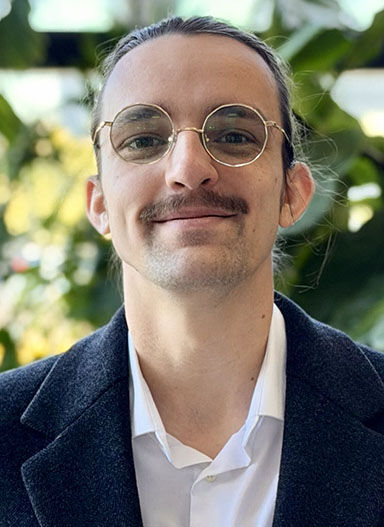
Jeffrey Dale
CTO, QodeX Quantum
Jeffrey Dale holds BS degrees in Computer Science and Mathematics from Missouri State University (2018) and a PhD in Computer Science from the University of Missouri – Columbia (2022). His undergraduate and graduate research were both focused on classical machine learning, with the latter primarily funded by Army and Navy grants. He went on to serve as a civilian research scientist at the Naval Surface Warfare Center, Panama City Division, during which time he was integrated into quantum error correction and quantum machine learning teams. In 2025, Dr. Dale and two colleagues left the Navy to start QodeX Quantum and pursue our shared passion for quantum machine learning. QodeX is building AlphaPsi, an agentic research platform for enterprise quantum teams to accelerate novel quantum algorithm discovery.

Antonio Paes
Director of Research Labs and Universities, D-Wave Quantum Computing
Antonio Paes is an academic and technology leader with a distinguished track record at the intersection of artificial intelligence, data, AI transformation and Quantum Computing.
He currently serves as Director for Research Labs and Universities at D-Wave Quantum Computing. He is a Professor at the University of Texas Dallas and until July 2026 was the Program director of the MS in Artificial Intelligence and Data Analytics.
With a career spanning globally with recognized organizations such as NASA, IBM, Boeing, Motorola, Morgan Stanley, Southwest Airlines, ThoughtWorks, Paes has led complex, high-impact initiatives across sectors. His expertise covers a broad spectrum including AI and Generative AI, Big Data, custom software engineering, cloud platforms, IoT, and Lean & Agile transformation. He is known for bridging technical depth with strategic business acumen, enabling organizations to translate emerging technologies into scalable, revenue-generating solutions.
Fluent in English, Portuguese, and Spanish, Paes operates effectively across international markets and multicultural environments.
He is a Judo and Brazilian Jiu-Jitsu instructor and practitioner. Originally from Brazil, he lives in Frisco, Texas, and spends his free time with his three kids, playing his instruments and sailing as well.

Mike Piech
Vice President – Business Development, Rigetti Computing
Mike Piech is vice president of business development at Rigetti Computing, with responsibility for sales, partnerships, and marketing. Prior to Rigetti, Mike was vice president and general manager of several business units at Red Hat, managing teams responsible for the product management, strategy, and marketing of Red Hat’s AI and middleware offerings. Prior to Red Hat, Mike held executive product roles at Magnet Systems (mobile app server) and Engine Yard (PaaS) after five years at Oracle and BEA with product responsibility for WebLogic, Java, and other enterprise platform technologies. Mike began his career at Sun Microsystems in R&D engineering roles in video and image processing. Mike holds an MBA from INSEAD, a BS in computer science and engineering from MIT, and several patents.
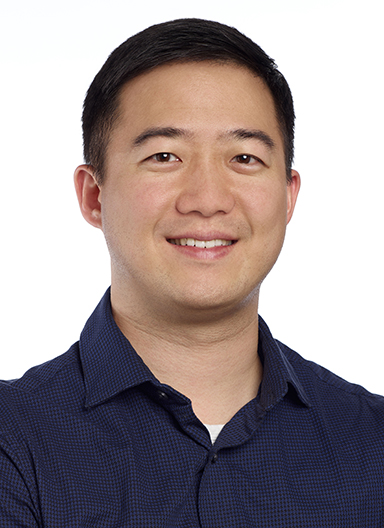
Alex Shih
Vice President of Product, Q-CTRL
Alex Shih is the Vice President of Product at Q-CTRL (q-ctrl.com), a quantum infrastructure software company building AI-powered, error reducing, performance maximizing software products for quantum hardware (quantum computers and quantum sensors). He has previously held product leadership roles at various technology companies, such as Slack, Airbnb, Planet Labs, and Google, and founded a couple startups (some of which have exited). He earned a dual Masters in engineering systems design and management from MIT and a B.S. in mechanical and aerospace engineering from Cornell University.
Missouri Industry and Government Panelists
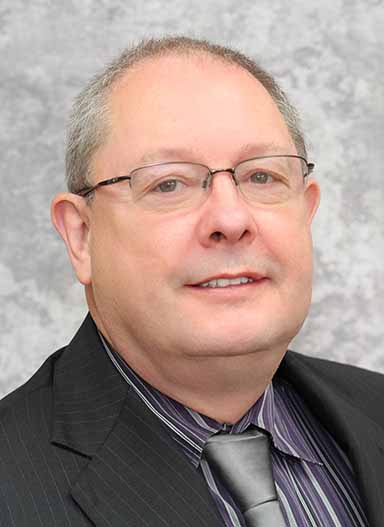
Earl J. Dodd
Global Principal Architect – HPC/Supercomputing and Emerging Technology, WWT
Earl J. Dodd is a supercomputing, accelerated-computing, and AI-infrastructure strategist with more than 45 years of experience advancing high-performance computing, high-performance data analytics, and extreme-scale data platforms. As WWT’s Global HPC and Emerging Technology Business Practice Leader, he helps enterprise and government organizations evaluate, architect, and operationalize transformative technologies across HPC, AI, cloud, edge computing, cognitive digital twins, and intelligent data systems.
Dodd specializes in turning emerging technology into practical business and mission outcomes. His current focus includes quantum simulation, silicon photonics, computational memory, next-generation accelerators, sustainable data centers, and composable infrastructure. He also advises boards, founders, and technology leaders on technical diligence, infrastructure roadmaps, strategic partnerships, and Horizon II opportunities.
His career includes leadership roles with Cray Research, SGI, Fujitsu America, IBM Deep Computing, and HPE, along with advisory and interim CTO roles for companies developing geospatial platforms, digital twins, sustainable energy systems, and new-space technologies.
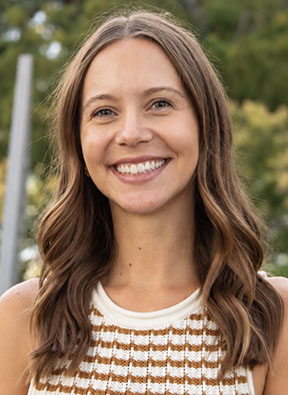
Kate Horstmann
Technical Integration Specialist, MOREnet
Kate Horstmann is a technical integration specialist with MOREnet, where she works with educators and technology leaders across Missouri to advance computer science, emerging technology, and workforce-connected learning in K–12 education. She led Missouri’s first QCaMP, bringing educators together with national laboratories, universities, and quantum experts to build pathways for introducing quantum computing in schools. Her work focuses on translating rapidly evolving technologies into meaningful opportunities for educators and students and strengthening the pipeline between K–12 education and Missouri’s future technology workforce.
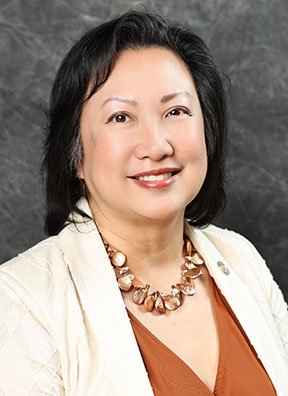
Anna Hui
Director, Missouri Department of Labor and Industrial Relations
Anna Hui was appointed Director of the Department of Labor and Industrial Relations in March 2017 and Senate-confirmed in January 2018, making her the first Asian American to serve in the governor’s cabinet in Missouri history. In addition to her agency, she also concurrently leads replanning the state’s ERP implementation that will ultimately replace all budget, financial, procurement, and HR systems that support all three branches of government. For three decades, Hui has worked in numerous executive positions in state governments of Illinois, New Jersey and Missouri as well as President George W. Bush’s Associate Deputy Secretary at the U.S. Department of Labor. From 2009-2015, she was Chief of Staff to former U.S. Department of Labor Secretary Elaine Chao.
An immigrant to the US at age one, Hui credits her parents’ raising her with a blend of Chinese and Midwestern values. She received a JD from Loyola University Chicago School of Law, an MSM and an MBA from the University of Maryland University College and BS in Psychology from the University of Illinois at Urbana-Champaign. She serves as Immediate Past President of the International Association of Industrial Accidents Boards and Commissions; Secretary-Treasurer of the National Association of Government Labor Officials; and Treasurer of the National Association of State Workforce Agencies.
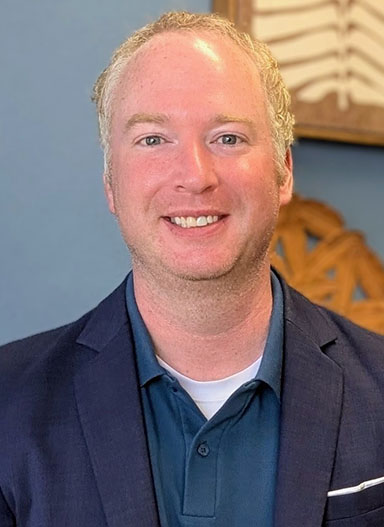
Tim Marczewski
Director of AI and Innovation, Missouri Office of Administration, Information Technology Services Division
Tim Marczewski serves as Director of AI and Innovation at the Missouri Office of Administration, Information Technology Services Division, and Missouri’s first Chief AI Officer. He leads Missouri’s statewide AI initiative under Executive Order 26-02, guiding the state’s approach to AI governance, tooling, and adoption across every agency.
Under his leadership, Missouri built a statewide AI access platform, giving state employees direct access to AI tools for their daily work. His team has delivered pilot programs that cut processing time on routine government tasks and built a governance framework other organizations have referenced in their own planning.
Before joining state government, Marczewski served as an Army Space Operations officer with assignments at the National Reconnaissance Office and U.S. Army Space and Missile Defense Command. He holds degrees from the Naval Postgraduate School, Missouri University of Science and Technology, and Purdue University.
Student Research Innovation Showcase
- Engineering Bell States in Atom-Molecule Condensates
- Narayan S. Adhikari, Dr. Simeon Mistakidis: Missouri S&T College of Engineering and Computing
- Towards Quantum-Assisted Optimization of Collaborative Human-Robot Order Picking
- Soham Basu, Dr. Sharan Srinivas: University of Missouri College of Engineering
- Quantum-Enhanced Multispectral Vegetation Intelligence for Precision Agriculture
- Dhanya Boyapally, Dr. Noel Aloysius: University of Missouri College of Engineering
- GRAMA: Quantum Kernels for Multi-Omics
- Nathan Bresette, Dr. Ai-Ling Lin, Dr. Jianlin Cheng: University of Missouri Institute for Data Science and Informatics
- Assessing the Scalability of Krylov Diagonalization Methods using IBM Quantum Devices
- Matthew Bruenning, Dr. Pontus Laurell: University of Missouri College of Arts and Science
- Hybrid Quantum-Classical Approach for Omics Analysis
- Sameep Dhakal, Dr. Chi-Ren Shyu: University of Missouri Institute for Data Science and Informatics
- Quadratic Unconstrained Binary Optimization for Quantum-Assisted Unit Commitment
- George Dimas, Dr. Mert Korkali: University of Missouri College of Engineering
- Compiler Freedom in Quantum EDA Circuits
- Owen Friedewald, Dr. Ali Shiri Sichani: University of Missouri College of Engineering
- Toward Hybrid Quantum-Classical Optimization for Stochastic Hydrothermal Unit Commitment
- Michael Geisecke, Dr. Hyeong Suk Na: University of Missouri College of Engineering
- Quantum Algorithm for Three-Part Counterpoint Music Generation
- Christian Hirni, Dr. Cory Brodack: University of Missouri College of Arts and Science
- Quantum-Enhanced Data Mining for Subgroup Discovery
- Arpita Howlader, Dr. Chi-Ren Shyu: University of Missouri Institute for Data Science and Informatics
- Continuous-Time Quantum Walk: A Different Lens on Molecular Similarity
- Nancy Ihechu, Dr. Dmitri Kireev: University of Missouri College of Arts and Science
- Quantum Algorithm for Tornado-Structure Interreaction Simulations
- Oliver Jackson, Dr. Yan Guirong: Missouri S&T College of Engineering and Computing
- Quantum vs. Classical Kernels for Financial Sentiment Classification
- Krishna Rithwik Karra, Dr. Kuntara Pukthuanthong: University of Missouri Trulaske College of Business
- Hardware-Aware Bayesian Quantum Architecture Search for NISQ Machine Learning with Applications to Power-Grid Security
- Muhammad Mahad Khaliq, Dr. Ali Shiri Sichani: University of Missouri College of Engineering
- Formal Verification of Quantum Secret Sharing
- Huzaifa Khan, Dr. Rohit Chadha: University of Missouri College of Engineering
- Measuring Ideological Drift in Humanitarian Discourse
- Jinho Kim, Dr. Baekkwan Park: University of Missouri College of Arts and Science
- Motif Based RNA Secondary Structure Prediction Using Quantum Computing
- Risi Liyanage, Dr. Shi-Jie Chen: University of Missouri College of Arts and Science
- Quantum-Assisted Identification of Inverter-Based Resource Dynamics in Weak Grids: A Hybrid Quantum Convolutional Neural Network
- Amin Masoumi, Dr. Mert Korkali: University of Missouri College of Engineering
- Quantum-Inspired Analysis for Detecting Financial Crime
- Leighton Morris, Dr. Jack Pelikan: University of Missouri Trulaske College of Business
- Quantum Feature Embedding for Periodic Polarization Signatures in material Classification
- Sara Shojaei, Dr. Filiz Bunyak: University of Missouri College of Engineering
- Variational Quantum Linear Solvers (VQLS) for High-Speed DC Power Flow under NISQ Constraints
- Mohammed Sleiman, Dr. Rui Bo: Missouri S&T College of Engineering and Computing
- Graph Variational Latent Space for Quantum Graph Neural Networks
- Seyed Mohamad Ali Tousi, Dr. G. N. DeSouza: University of Missouri College of Engineering
- Quantum Adversarial Variational Learning for FDIA Detection in Smart Grid Cyber-Physical Systems
- Pulluri Varshith, Dr. Ali Shiri Sichani: University of Missouri College of Engineering
- Predicting a Superconducting Machine’s Noise Induced Barren Plateau for Generative AI on QAOA Problems
- Ashton Wooster, Dr. Chi-Ren Shyu: University of Missouri College of Engineering
- Environmental Transport Modeling with a Hybrid Quantum-Classical Lattice Boltzmann Method
- Xuchen Ying, Dr. Binbin Wang: University of Missouri College of Engineering
- Development of Telecom Quantum Source Based on SiC Color Centers
- Fatema Tuj Zohra, Dr. Ping Yu: University of Missouri College of Arts and Science
- Can Quantum Computing Detect What Classical Methods Miss?
- Rohitha Sresta Ganji, Dr. Kuntara Pukthuanthong: University of Missouri Trulaske College of Business
—-
Learn more about the 2025 Mizzou Quantum Day.