March 04, 2026
An interdisciplinary project aims to help farmers extract value from low-cost resources to improve soil health and maximize productivity and profitability.
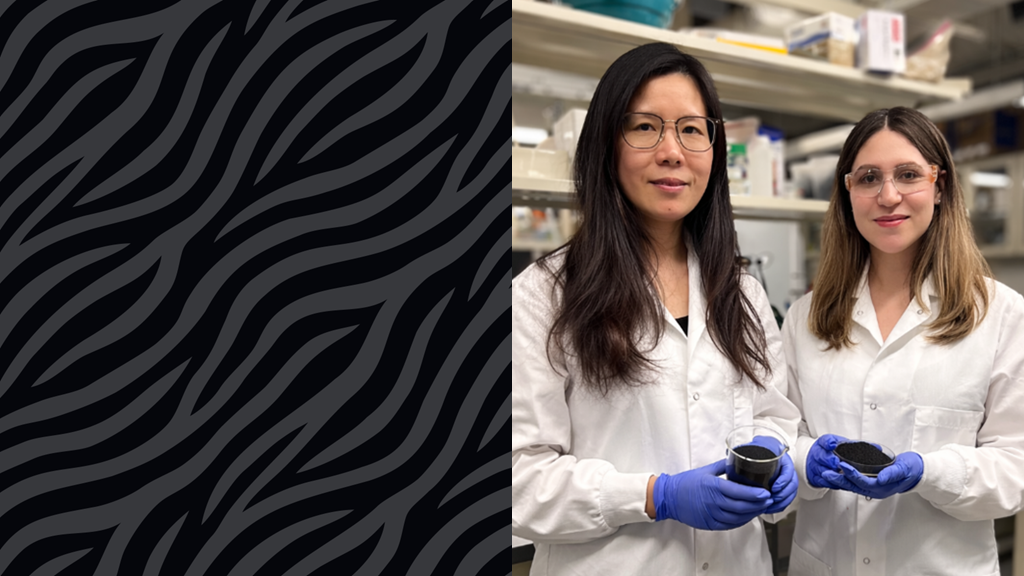
At Mizzou, researchers collaborate across disciplines and explore new paths in pursuit of answers to real-world issues like those faced by farmers right here in Missouri.
Caixia “Ellen” Wan, an associate professor in the Department of Chemical and Biomedical Engineering, is developing a solution to improve soil health and meet the challenges posed by changing environmental and market conditions.
Extreme weather events like record-setting temperatures, flooding and prolonged drought can lead to soil loss, reduced soil health and nutrient leaching, all of which threaten the productivity of conventional agriculture operations.
As a hedge against these threats, some farmers are turning to organic production. The number of certified organic operations has roughly doubled in the last 15 years, with more than 3.5 million acres of cropland certified organic, according to the Department of Agriculture (USDA).
To be certified organic, farmers must follow stringent — and expensive — production rules. They gamble they will earn dividends in the premium prices organic products command and in a growing market. More than 80% of U.S. households purchase organic food, according to the USDA.
Wan wants to even the odds and help farmers achieve profitability as they reduce reliance on synthetic fertilizers and enhance soil fertility.
“We want to help small- and medium-sized farms transition land that is not currently ready for organic farming into productive organic systems,” Wan said.
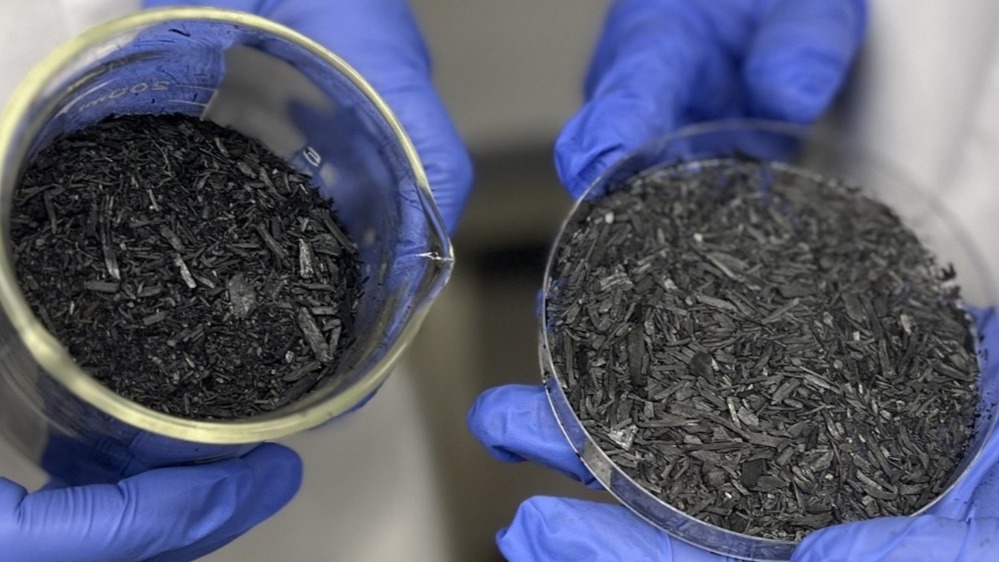
The key to the transition is biochar, a carbon-rich material produced by heating organic waste like wood or crop residues in low-oxygen environment. Biochar has a high surface area and porosity, which helps it retain nutrients, improve soil structure, boost microbial activity and build stable soil.
Supported by a $960,000 grant from the USDA National Institute of Food and Agriculture, Wan will combine biochar with compost and beneficial microbes to improve soil health and fertility in organic farming systems.
Wan is leading an interdisciplinary project team with co-PIs from the Mizzou College of Agriculture, Food and Natural Resources (Xiaoping Xin) and University of Missouri Extension (Timothy Reinbott) as well as Lincoln University and the USDA Forest Service Forest Products Laboratory.
For now, the team is focused on vegetable production rather than row crops like corn or soybeans.
“We hope to extend the approach to other crops in the future,” she said. “We want to first demonstrate that our proposed technology and concept can be implemented effectively.”
The first step is to conduct greenhouse trials to test biochar from various feedstocks — such as tomato vines, wheat straw, sorghum residue, grass hay and woody biomass — to identify the most effective type.
The team will conduct field trials to assess effectiveness of combinations of biochar, compost, microbes and other biologically derived products on soil health and vegetable yields at the Missouri Agricultural Experiment Station and other sites.
The researchers will then test biochar-based amendments in real-world conditions with local farmers, who will also serve as advisors to the project.
“Their feedback is vital to our success,” Wan said. “We engaged them early in the planning process through surveys and discussions to ensure the project addresses their needs.”
Wan anticipates that the biochar-based soil amendment strategies will improve soil health, increase crop yields and profitability for farmers. She will work with MU Extension on outreach activities, including field days and grower conferences.
The project is another example of how Mizzou researchers across campus are advancing innovation to secure livelihoods in Missouri.
“I’m excited about the practical applications and the collaborative nature of this work,” Wan said. “It brings together experts from different fields to pursue integrated solutions and allows me to combine engineering with agricultural systems in a meaningful way.”
Discover more ways Mizzou Engineering delivers practical answers to real-world issues.