November 09, 2026
A $2.1 million grant will enable Mizzou researchers to give communities better information for making emergency response and flood adaptation decisions.
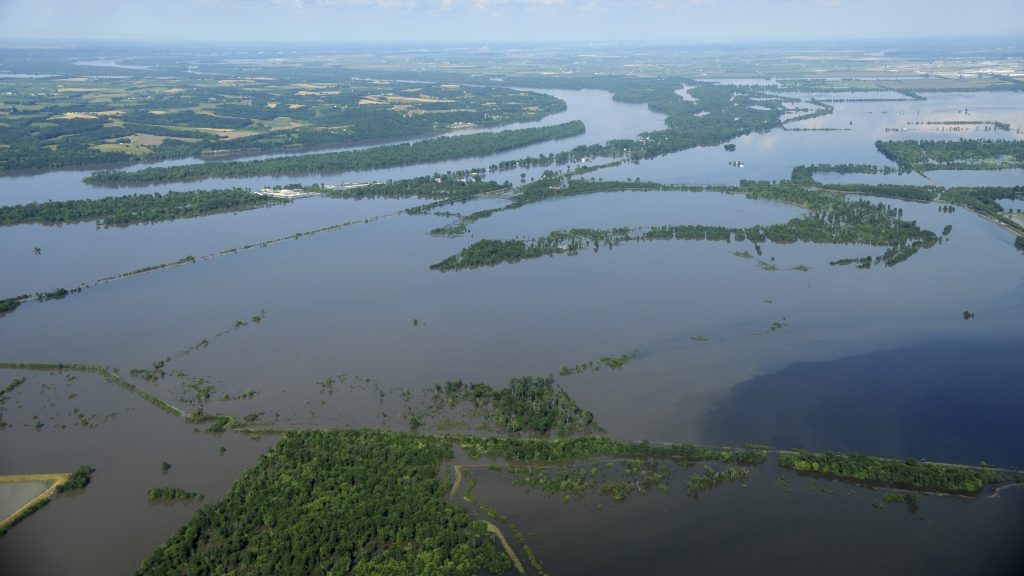
Mizzou researchers are developing an integrated system to better prepare municipalities for flood emergencies and help with rapid response and evacuations and long-term flood adaptation.
With a $2.1 million award from the National Institute of Standards and Technology (NIST), the researchers will develop river models, integrate community knowledge into the models and evaluate the impact of floods. These activities will support levee management, transportation planning and emergency response strategies.
Who is conducting the research?
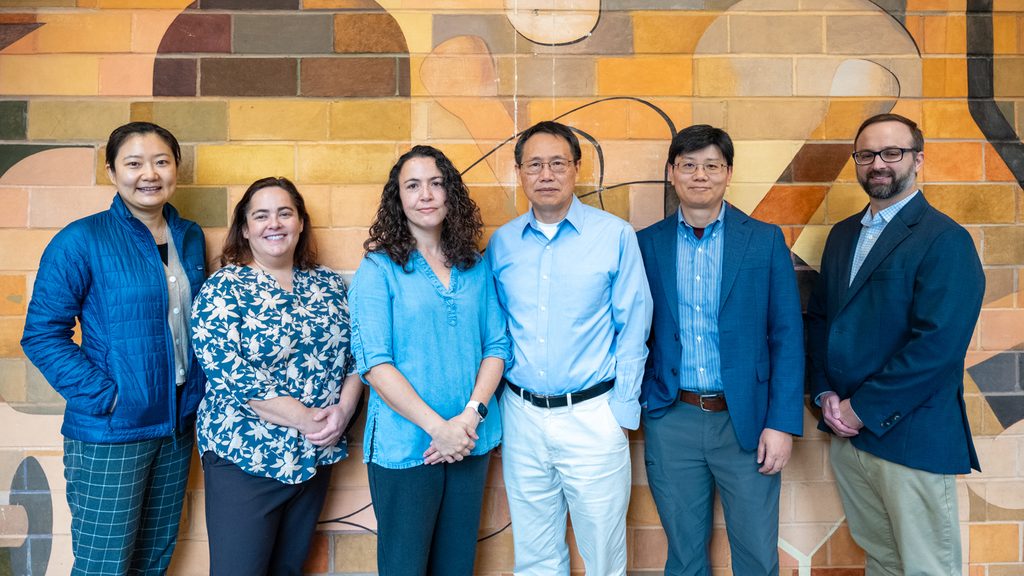
Baolin Deng leads the project. He is a Curator’s Distinguished Professor and William Andrew Davidson Professor in the Department of Civil and Environmental Engineering as well as co-director of the Missouri Water Center.
The team includes Associate Professor Binbin Wang and Assistant Professor Brandon Sansom of Mizzou Engineering with expertise in river modeling, and Missouri Water Center co-director and Associate Professor Katherine Nelson, Associate Professor Robin Rotman and Associate Professor Shuangyu Xu of the School of Natural Resources with expertise in participatory science and community engagement.
The interdisciplinary approach by the team will ensure the research results are relevant to and understandable by affected communities.
Why is this research important?
According to the National Oceanic and Atmospheric Administration’s National Centers for Environmental Information, from 1980 to 2024, the United States experienced 45 flooding events where overall damages/costs reached or exceeded $1 billion — about one a year. In total, 742 people died in these floods.
Flooding is the deadliest severe weather hazard in Missouri. In 2024, flooding killed nine people in the state. The 2019 floods in the Lower Missouri and Mississippi Rivers affected approximately 14 million people and caused an estimated $13 billion in damages.
“This project will develop a modeling platform that will greatly enhance our ability to support decision-making process on implementing flood/drought risk mitigation projects by federal and state agencies.”
– Baolin Deng
Who benefits from this research?
The main beneficiary will be the Lower Missouri River communities that have been experiencing significant flood events recently. The prototype modeling system will begin with the City of Brunswick area, and then be extended to other areas in the future, benefiting a wide group.
“This project will benefit Missourians living and farming in the river basin communities and other public and private stakeholders in charge of managing and use the Big Muddy, such as inland navigation industries and natural resources conservation groups.”
– Baolin Deng
Who is funding this research?
This community project is awarded to Missouri Water Center by NIST at $2.1 million, secured by Congressman Sam Graves with strong support from broad communities in Missouri. NIST promotes U.S. innovation and industrial competitiveness by advancing measurement science, standards and technology in ways that enhance economic security and improve our quality of life.
Bottom line
Mizzou researchers are building a tool to help communities better prepare for flooding and respond more quickly when floods happen. The team will create models that predict river behavior, incorporate input from local residents and officials, and assess the potential impacts of flooding. The goal is to give communities better information for managing levees, planning transportation routes, and making emergency response and evacuation decisions.
What can I study if I’m interested in this research?
Interested Mizzou Engineering students can earn bachelor’s degrees in civil engineering or environmental engineering. The accelerated BS to MS in civil and environmental engineering enables a student to earn a master’s in as little as one year after their bachelor’s degree.
Graduate students can pursue an online, non-thesis master’s degree in civil engineering and a PhD in civil engineering.
“Students interesting in computation and visualizations could find a role in work like this, especially those also interested in water resources and environmental engineering and natural resources.”
– Baolin Deng