
Jan. 20, 2026
Mizzou, UM System among the top 1% for research cybersecurity
This milestone highlights the university’s commitment as a top research institution.
Dec. 15, 2025
Researchers target Missouri mines for critical materials
A $2.8 million U.S. Department of Energy award is powering the development of breakthrough extraction technology.
Dec. 3, 2025
Empowering community-driven solutions to a global issue
Researchers are using satellite data and AI to produce a granular inventory of greenhouse gas emissions sources around the world.
Nov. 17, 2025
Mizzou Engineering researcher advancing technology to reinforce scientific integrity
MizzouForward hire Tanu Malik is developing new tools that will enable the efficient and reliable reproduction of studies.

Oct. 12, 2025
Mizzou Engineering researcher aims to level the AI playing field
A visionary project would give academic researchers access to next-level computing resources to supercharge their work.
Oct. 1, 2025
Researcher awarded nearly $3 million to study how the brain repairs itself after a stroke
Mizzou Engineering professor Shinghua Ding is undertaking new research funded by a prestigious National Institutes of Health grant.
Aug. 18, 2025
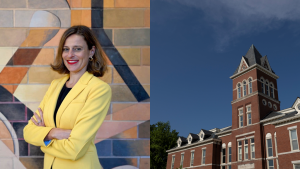
Leveraging technology to transform engineering education
A $2.5 million collaboration between Mizzou and UConn aims to personalize learning for more engineering students.
March 25, 2024
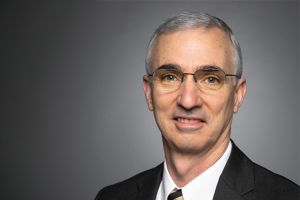
Mizzou Engineer to help U.S. Army assess systems as part of groundbreaking Department of Defense project
Mizzou Engineering is contributing to a groundbreaking project that aims to help the U.S. Army make more timely and strategic decisions in today’s technology-driven defense landscape.

Feb. 7, 2024
Engineer devising hybrid two-phase system to efficiently cool data centers
A Mizzou Engineering researcher is devising a system to cool data centers down more efficiently and effectively. Chanwoo Park is leading a project funded by the U.S. Department of Energy’s Advanced Research Projects Agency-Energy (ARPA-E) in collaboration with the National Renewable Energy Lab. It’s part of a $40 million endeavor called COOLERCHIPS, which stands for Cooling Operations Optimized for Leaps in Energy, Reliability and Carbon Hyperefficiency for Information and Processing Systems.
Feb. 5, 2024
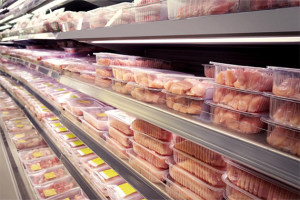
$5 million NSF grant supports innovative approach to prevent foodborne illnesses
Like a silent saboteur, foodborne pathogens can sneak up and ruin your next meal. One of the biggest culprits is salmonella, a type of bacteria found in many foods that causes more than 1.3 million cases of foodborne illnesses annually according to the Centers for Disease Control and Prevention. Despite nationwide efforts, salmonella’s infection rates have remained nearly unchanged for the past 30 years. Now, MU is part of an interdisciplinary effort determined to change that after recently receiving a three-year, $5 million grant from the National Science Foundation’s Convergence Accelerator program.
- « Previous
- 1
- 2
- 3
- 4
- Next »