Discover research news about Mizzou’s Department of Chemical and Biomedical Engineering.
Sep. 21, 2026
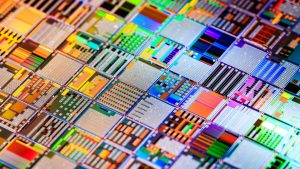
Shining a new light on advanced semiconductor manufacturing
Mizzou Engineering researchers are exploring a more flexible and efficient process to create next-generation electronics.

Sep. 21, 2026
Mizzou study featured in Advanced Materials
The interdisciplinary study focuses on patterns of molecular building blocks used to create conductive polymers and provides a new design rule for materials engineers.
July 26, 2026
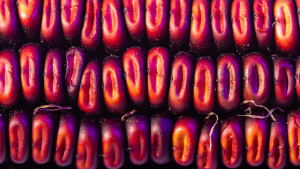
Researchers discover natural replacement for artificial dyes
Research could help manufacturers replace synthetic colors while creating new opportunities for Midwest farmers.

June 29, 2026
Mizzou researchers making food safety testing simpler
Study shows how an essential process can be made faster, more affordable and accessible, benefiting agricultural producers, regulators and consumers.
May 4, 2026
Helping growers produce sweet corn more efficiently
University of Missouri researchers find farmers can cut back on water without losing crop quality.

April 14, 2026
Cross-campus collaboration leads to materials breakthrough
Mizzou researchers have introduced a novel bioadhesive material platform that will enable next-generation devices with shape memory behavior.
April 12, 2026
Mizzou researchers build ‘green’ protection for fragile enzymes
The new water-based process could reduce or eliminate toxic organic solvents from the manufacturing of medicines, biofuels and food.
March 23, 2026
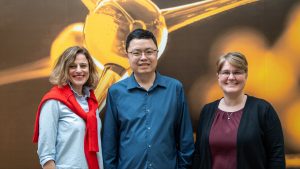
Yan’s research recognized at campus and national level
The Chancellor’s Award for Outstanding Research and Creative Activity in Physical and Mathematical Sciences comes on the heels of a $2.3m NIH award.
March 4, 2026
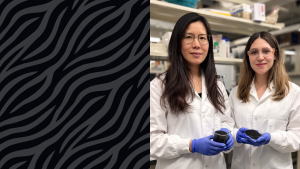
Sowing the seeds of agricultural and economic security
An interdisciplinary project aims to help farmers extract value from low-cost resources to improve soil health and maximize productivity and profitability.

March 1, 2026
Mizzou researchers developing a rewritable DNA hard drive
The work moves data storage closer to a practical system for storing information at the molecular level faster, simpler and more efficiently than ever before.