Feb. 17, 2026
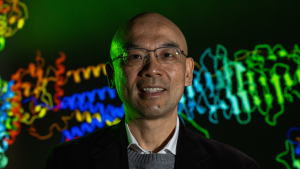
Making AI-based scientific predictions more trustworthy
University of Missouri researchers have developed a free-to-use software tool to verify the accuracy of artificial intelligence-based protein structure predictions.
Feb. 16, 2026
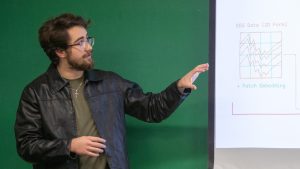
Computer science students take on neuroscience
Engineering students demonstrated creativity, problem-solving and teamwork in NSF-funded research projects that applied advanced technology to the human nervous system.
Feb. 9, 2026
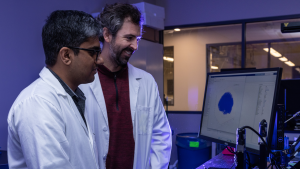
3D-printed brain models could revolutionize medical research
Doctors and medical students could one day train on models that look and feel like the real thing, giving them more chances to practice safely before working with patients.
Nov. 3, 2025
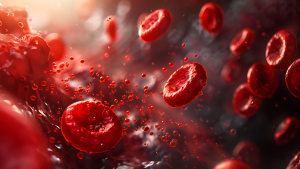
Mizzou researchers pioneer ultrasound technology to measure blood viscosity
The breakthrough invention could help introduce viscosity as a new vital sign of human health.
Oct. 26, 2025
Mizzou researchers identify a new rare genetic disease
Discovery could help improve diagnosis and treatment of unexplained movement disorders.
Oct. 1, 2025
Researcher awarded nearly $3 million to study how the brain repairs itself after a stroke
Mizzou Engineering professor Shinghua Ding is undertaking new research funded by a prestigious National Institutes of Health grant.
Oct. 1, 2025
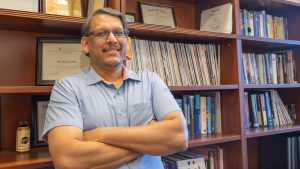
Engineer’s work underpins new telehealth research center
Associate Professor Praveen Rao is sharing his expertise in machine learning and artificial intelligence to improve rural health care.
Sep. 28, 2025
Healing backs without screws or metal implants
With NIH funding, University of Missouri researchers are pioneering biological alternatives that could someday help the body heal itself.
July 23, 2025
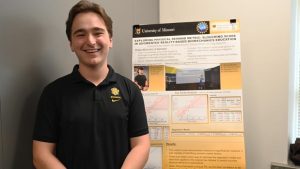
Undergraduate researcher wins international acclaim
Industrial Engineering senior garners top paper award for research on physical demand in AR users.
July 21, 2025
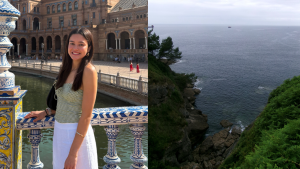
Study abroad proves transformative for biomedical engineering undergrad
Michaela Duran seized the opportunity to embrace Spanish culture and biotechnology this summer in Madrid.