AI at Mizzou Engineering
Engineers now use AI in design, analysis and testing. At Mizzou Engineering, students learn to use AI tools in their courses and research, and to check the results.
University-approved AI tools
Mizzou students have access to AI tools approved by the university, including Google Gemini Pro and Microsoft 365 Copilot at no cost. Students sign in with their university account to use the protected versions of these tools for coursework.
AI policies in every course
Every Mizzou course syllabus includes an AI policy. Undergraduate assignments are labeled on the MU Student AI Use Scale, which tells students how much AI use is allowed.
Teaching and learning with AI
A $1.5 million National Science Foundation grant, in partnership with the University of Connecticut, supports AI in Mizzou Engineering classrooms for both faculty and students.
Faculty professional development
Through the grant, faculty build their skills in teaching with AI and redesign courses, assignments and AI policies.
AI Learning Lab
The grant also funds the AI Learning Lab, Mizzou Engineering’s resource for students learning to use AI. The Lab serves as the student-facing experimental hub for developing, testing and refining AI tools that support learning across the College. It is designed as a complement to the faculty-facing AI-Neuroinclusivity (AI-NI) framework, and it directly operationalizes the project’s goals.
Certificate in AI Fundamentals and Applications
The 12-credit certificate is open to Mizzou undergraduates in any major. No programming experience is needed, and courses are offered now.
| Course | |
|---|---|
| Foundations | AI Essentials (ENGINR 2550) |
| Writing | Writing with AI (INTDSC 3010 or 3010W) |
| Your field | One approved domain course |
| Design studio | AI Design Studio (CMP_SC 4950 or INTDSC 4010) |
AI research and experience
Undergraduates can join AI research with Mizzou Engineering faculty. Research experience prepares students for internships, jobs and graduate study.
Since 2021, Mizzou Engineering faculty have led nearly 70 AI-related research awards, bringing in more than $32 million.
Faculty AI research areas
Mizzou Engineering faculty research areas include:
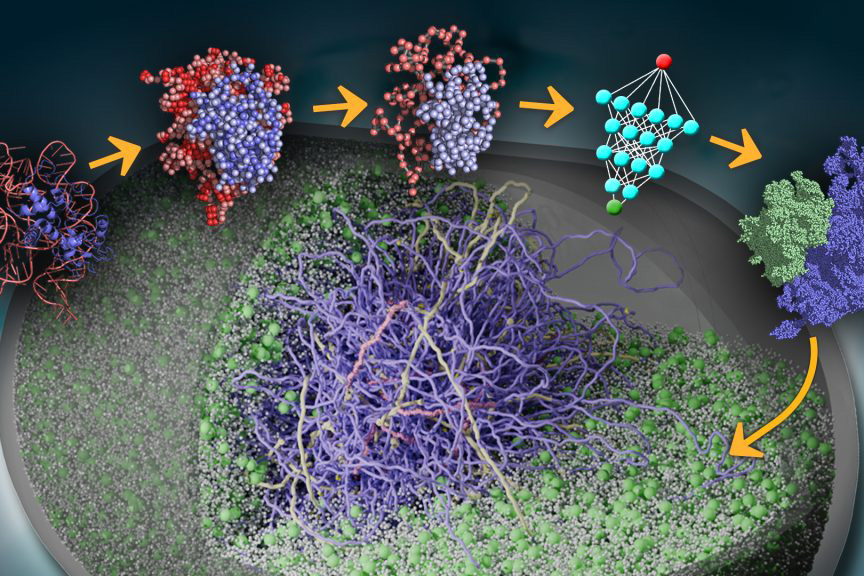
Health and Biology
Rebuilding protein structures, modeling living cells and supporting families affected by autism.

Materials and Manufacturing
Designing new molecules faster and running AI-controlled experiments on battery materials.
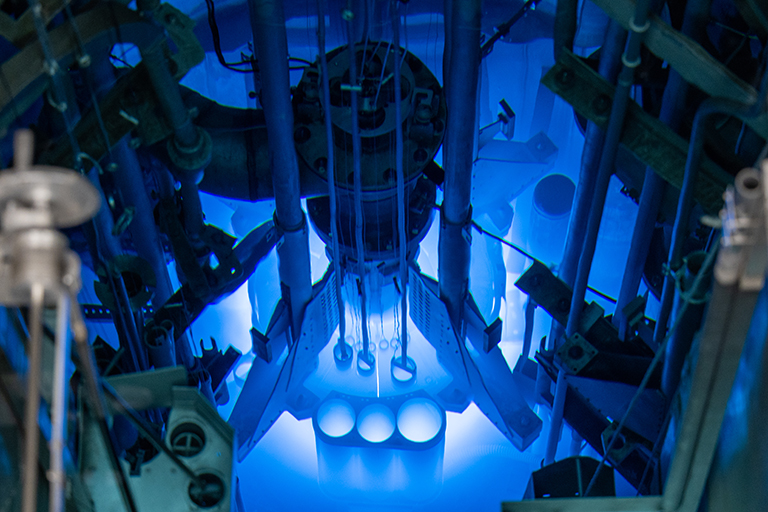
Energy
Smarter energy storage, more efficient power conversion and safer nuclear reactors.

Agriculture and Environment
Drones over Missouri wetlands, vegetation mapping and global emissions estimates.

Transportation and Logistics
AI vision for safer intersections and better roads, plus tools for faster evacuations.
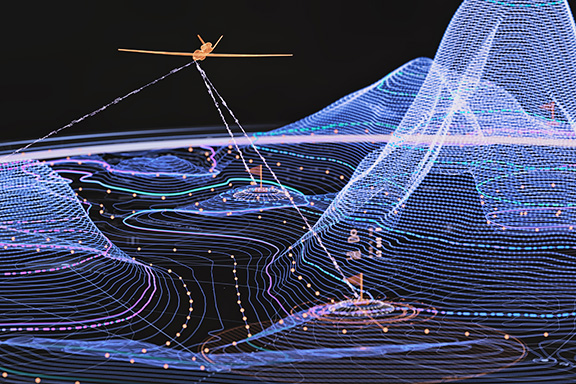
Geospatial Intelligence
Turning satellite and aerial imagery into maps and data.
Industry and Media
Price forecasting for Missouri steelmakers and AI tools that help newsrooms.
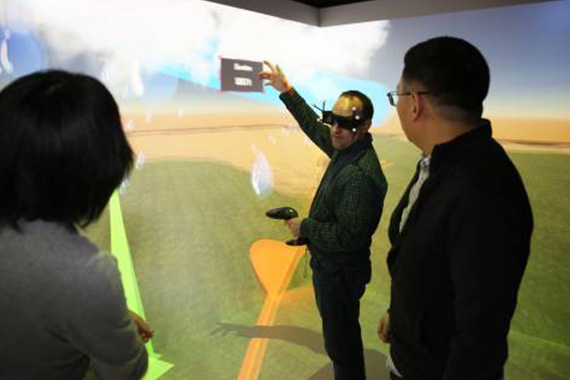
Teaching and Learning
AI-guided virtual reality for semiconductor and construction training, and AI literacy for high schools.

The Next Generation of AI
Computing to train large language models and more energy-efficient AI hardware.
AERI: Mizzou’s center for AI
The AI Education, Research and Infrastructure Center (AERI) is the university’s hub for AI, supported by the College of Engineering, the College of Arts and Science and the Division of IT. AERI connects researchers with computing resources and with partners including Google Public Sector, World Wide Technology, NVIDIA and Amazon Web Services. In May 2026, AERI brought more than 200 leaders from across Missouri to the AI-Ready Missouri Summit.
Undergraduate student research

Kim Gerhard
Chemical engineering | Desloge, Missouri
Kim is developing an automated system that uses AI agents to run low-cost potentiostats, instruments that measure the electrochemical properties of materials. These experiments need constant monitoring and repeated decisions, so automating them saves researchers time. Her work is one piece of a larger system in Dr. Matthias Young’s lab that combines rapid materials synthesis and testing.
“Working on this project has allowed me to develop a deeper understanding of the intersection between artificial intelligence and materials science, a growing field that I hope to join after graduation.”

Luke Watkins
Industrial and systems engineering | St. Louis, Missouri
Luke is building a simulation of a supersonic passenger network between New York and London to test how fleet size, cabin size and ground turnaround times affect passenger wait times and capacity. Working with Dr. Suchithra Rajendran and PhD mentor Caden Davis, he models passenger arrivals from real air travel data and uses AI tools to build and debug the model and to find research papers and datasets.
“Through AI, I am being exposed to advanced industrial engineering concepts before learning about them in my classes.”
Graduate degrees in AI
Mizzou Engineering offers an MS and a PhD in artificial intelligence.

MS in AI
Coursework in machine learning and deep learning, with advanced topics such as natural language processing, computer vision and bioinformatics, plus hands-on research projects. Graduates work as machine learning engineers, data scientists and AI researchers in fields such as health care, finance and manufacturing.

PhD in AI
Research-focused study in deep learning, computer vision, generative AI, natural language processing, bioinformatics and autonomous systems, with faculty mentorship and interdisciplinary collaboration. Graduates go on to careers as AI scientists, academic researchers and technical leaders in industry, or start their own companies.
NSF Research Traineeship in materials and data science
PhD students in any materials-related field can join Mizzou’s National Science Foundation Research Traineeship, which pairs materials research with data science and AI. Trainees earn a graduate certificate in data science and analytics alongside their PhD, and U.S. students can compete for fellowships that cover a stipend, tuition and fees.