Engineering the devices, materials and processes that human health depends on.
Our faculty design the devices, materials and processes used to diagnose disease, deliver treatment and repair tissue, and to convert agricultural products and waste streams into higher-value material. The research extends from implantable and wearable sensors, biosensors and medical imaging through materials for drug delivery and tissue regeneration to bioprocessing at production scale.
Much of this work is carried out through NextGen Precision Health, which spans the four University of Missouri campuses and places engineers alongside clinicians and life scientists in Columbia, adjacent to the university’s academic health system. Faculty collaborate with the School of Medicine, the College of Veterinary Medicine and industry partners, with support from the National Institutes of Health, the National Science Foundation and the National Institute of Food and Agriculture.
Faculty
Devices, imaging and biosensors
Design and fabrication of implantable and wearable sensors, biosensors and medical imaging systems.
Li-Quon Gu
Professor
Reza Montazami
Professor
Robert Thomen
Associate Professor
Xiangqun Zeng
Professor
Nicole Hashemi
Professor
Shramik Sengupta
Associate Professor
Zheng Yan
Associate Professor, Cramer W. LaPierre Professor
Biomaterials and regenerative medicine
Development of materials for implantation, drug delivery, tissue repair and regeneration.
Jennifer Fiegel
Professor and Chair
Christopher O’Bryan
Assistant Professor
Bret Ulery
Associate Professor
Sheila Grant
Curators’ Distinguished Professor
Diana Gil Pagés
Associate Professor
Zhongyu Yang
Associate Professor
Bioprocessing, food and agricultural engineering
Biological and chemical processing of food, agricultural products and waste streams at production scale.
Kiruba Krishnaswamy
Associate Professor
Anchoring Center
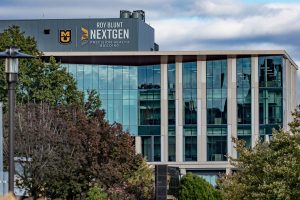
NextGen Precision Health
Roy Blunt NextGen Precision Health Building
NextGen Precision Health spans the four University of Missouri campuses and brings engineers together with clinicians and life scientists. Its Columbia facility sits alongside the university’s academic health system.
Highlights
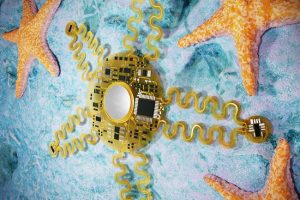
Soft wearable bioelectronics for cardiac monitoring
Zheng Yan – Awarded March 2026
$2.31M | National Institutes of Health
This project develops soft, porous wearable bioelectronic systems for real-time cardiac monitoring. The multimodal design maintains signal accuracy during motion, a limitation of conventional wearable sensors.
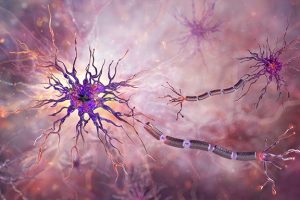
Motor neuron degeneration in a rare disease
Shinghua Ding – Active
$2.28M | National Institutes of Health
This project investigates the pathogenesis of a disease associated with a P158A mutation in NAMPT and the motor neuron degeneration it produces.
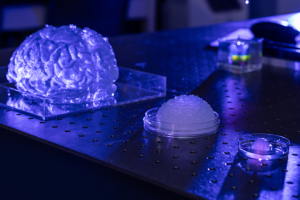
Tissue-mimicking materials for impact protection
Christopher O’Bryan – Active through 2029
$1.24M | U.S. Army Research Office
Protective equipment is evaluated against rigid surrogates that do not reproduce how soft tissue and organs respond to blunt impact. This project characterizes the mechanical behavior of tissue-mimicking materials so that protective systems can be designed around human anatomy.

Soil amendments for vegetable production
Caixia Wan – Active through 2029
$960K | National Institute of Food and Agriculture
This project examines how biochar, microbial inoculants and compost interact when applied together. The work targets productivity and profitability for small and medium transitioning vegetable operations.
Circularity in regional food systems
Kiruba Krishnaswamy – CAREER award, through 2029
$532K | National Science Foundation
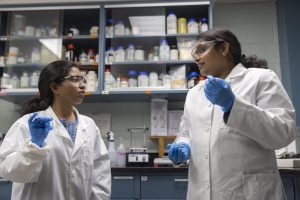
This CAREER award develops methods to recover value from food production and processing residues. The work supports circular design in regional food systems.
Bio-ionic transistors for reading cellular activity
Reza Montazami – Active through 2028
$480K | National Science Foundation
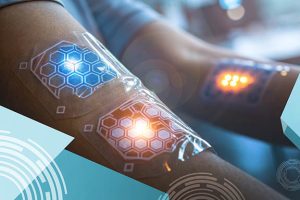
Cells signal through the movement of ions, a process conventional electronics can only measure indirectly. This work develops a soft transistor that operates on ionic rather than electronic current, making it possible to record cellular activity directly at the interface with living tissue.
Modeling drug transport across the placenta
Nicole Hashemi – Active through 2027
$350K | National Science Foundation
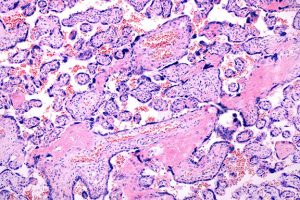
Clinicians have few reliable ways to predict which pharmaceutical compounds cross from maternal to fetal circulation. This project builds a microfluidic platform that reproduces placental blood flow, tissue mechanics and permeability, designed for high-throughput screening at a cost that makes routine use practical.