May 23, 2023
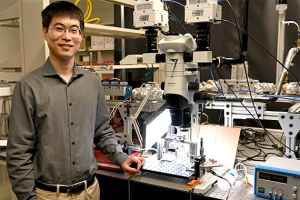
Jin works to advance technology to solve climate challenges, meet energy demands
Yue Jin has been interested in nuclear power as a clean energy source since his undergraduate studies at a top-ranked university in China. So, after completing a PhD from Pennsylvania State University and working as a post-doctoral fellow at MIT, he saw Mizzou as an obvious next step.
May 23, 2023
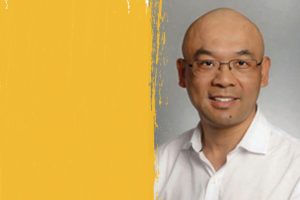
Cheng developing software to predict protein function using generative AI
A Mizzou Engineer has received funding from the National Science Foundation to develop a tool that will predict how a protein functions based on its order of amino acids. Jianlin “Jack” Cheng envisions developing open source software that would allow a user to enter the sequence, then the system would predict not only how that string of amino acids will form into a structure but also the role it will carry out within a cell. Additionally, the system would pinpoint the specific site of the protein that carries out the function.
May 18, 2023
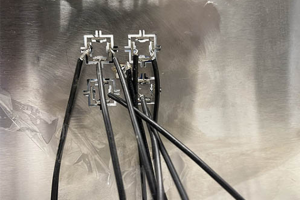
Smart material prototype challenges Newton’s laws of motion
For more than 10 years, Guoliang Huang, the Huber and Helen Croft Chair in Mechanical and Aerospace Engineering, has been investigating the unconventional properties of “metamaterials” — an artificial material that exhibits properties not commonly found in nature as defined by Newton’s laws of motion — in his long-term pursuit of designing an ideal metamaterial. Huang’s goal is to help control the “elastic” energy waves traveling through larger structures — such as an aircraft — without light and small “metastructures.”
May 15, 2023
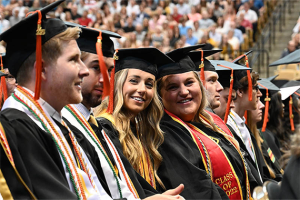
Mizzou Engineering confers more than 400 degrees at Spring Commencement
More than 400 students graduated from Mizzou Engineering this past weekend, the largest class since 2019.
May 15, 2023
On anniversary, MU Materials Science & Engineering Institute celebrates success
Since opening a year ago, the MU Materials Science & Engineering Institute (MUMSEI) has had a lot of tangible successes.
May 8, 2023
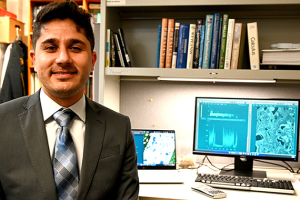
Graduate student to use environmental engineering, data analysis skills at NASA
He grew up in a water-strapped village in Afghanistan, worked as a water engineer who helped similar communities and wants to continue to conduct research around environmental problems while teaching future generations. In the meantime, Jaweed Nazary will spend his summer working at NASA.
May 5, 2023
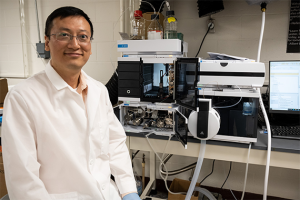
Pioneer in degradation of ‘forever chemicals’ brings research to Mizzou
Before most of his peers knew them as “forever chemicals,” Feng “Frank” Xiao knew they were a problem. It was the early 2010s, and he was reviewing Centers for Disease Control data when he noticed a disturbing trend. Pre- and polyfluoroalkyls (PFAS) — compounds mass marketed since the 1940s — were showing up in more than 95% of blood samples, and they appeared to be wreaking havoc on human health.
May 4, 2023
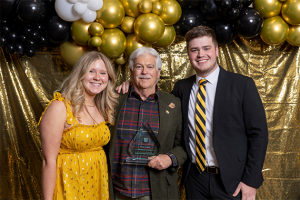
Borgelt receives MU Advisor of the Year Award for service to students, E-Week
Steve Borgelt was honored this week with the University of Missouri’s Advisor of the Year Award for his more than decade of service as advisor of the Engineers’ Club and St. Patrick’s Board at Mizzou Engineering.
May 4, 2023
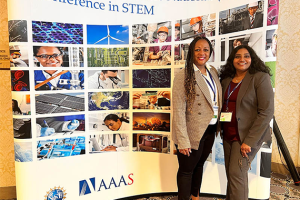
Krishnaswamy shares solutions for a zero hunger world at AAAS Conference
More than 2 billion people in the world face hidden hunger and malnutrition, even as 1.3 billion tons of edible food is either lost or wasted every year. Meanwhile, it’s estimated that the global human population will increase to 9-10 billion over the next 50 years, putting even more strain on food production. These are overwhelmingly complex problems. Assistant Professor Kiruba Krishnaswamy has a way of making solutions sound simple.

May 2, 2023
‘Explainable AI’ can efficiently detect augmented/virtual reality cybersickness
Exposure to an augmented reality (AR) or virtual reality (VR) environment can cause people to experience cybersickness — a special type of motion sickness with symptoms ranging from dizziness to nausea — and existing research to mitigate the severity of the symptoms often relies upon a one-size-fits-all approach. However, Khaza Anuarul Hoque, an assistant professor in the Department of Electrical Engineering and Computer Science, and a team of researchers are working to develop a personalized approach to identifying cybersickness by focusing on the root causes, which can be different for every person.